Pages

.

QuickThoughts: Stop Overhyping Anime!

Video Version:
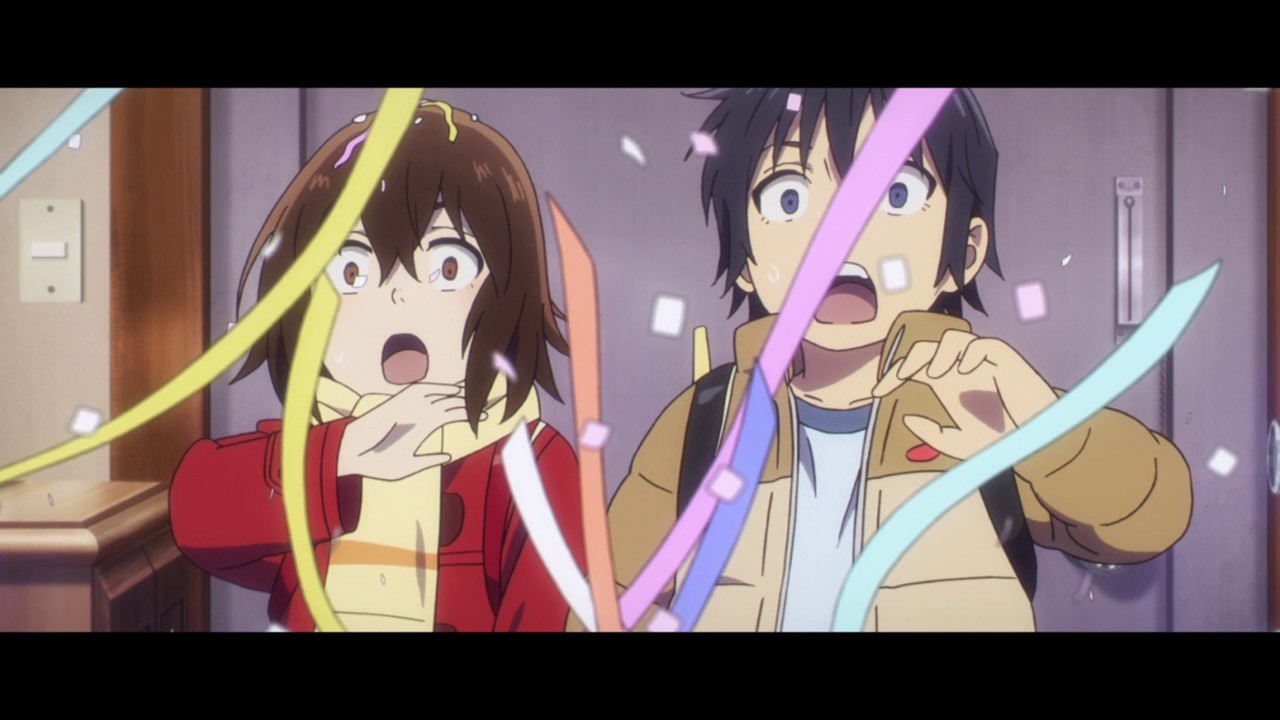
Well, ERASED, or Boku Dake ga Inai Machi, or whatever the heck you want to call it, has just ended and I bet I’m going to get some requests to review it. I hate beating a dead horse, so if you know the words "overrated", "overhated", and "overhyped,” you've got the right idea. Of course, there’s more to that, but I’m not going to deal with that now. Instead, while this post certainly concerns the show, it's more a general message towards the community surrounding it, specifically all the people who hyped ERASED to the extreme.
I don't think hype is necessarily a bad thing, but recently, it's just gotten out of hand. I mean, rating One Punch Man as the greatest show on IMDB, which is above Breaking Bad, Rick and Morty, and Game of Thrones, before it's even finished? Its rating did fall after a couple weeks, granted, but still, don't you think that's presumptuous and rash?
The same exact thing happened with ERASED, where there was so much praise for it that it got into the top 5 anime on many sites by the 4TH EPISODE. This is almost as bad as completely dismissing an anime as an abomination after only 4 episodes (I mean, I shouldn't really be talking considering that I've dropped nearly 50 anime, but you get what I'm saying). Don't people realize that this type of omnipresent and overwhelming hype influences other people enormously? Yeah, you've got the people who can see through the hype and are able to not let it bother them, but most can't. You have to draw the line somewhere.
This especially pertains to currently airing anime, where everyone is basing their opinions off of smaller portions of anime, and speculating from there. Everyone should allowed to speculate, but it's just that: speculation. It implies uncertainty about the future, and letting yourself truly believe that a show will be good in the future isn't healthy. Eventually, it burns you out when you inevitably become disappointed. It's like expecting that you'll get into a really good college without preparing properly, but having way too much confidence that you'll get in. When you receive that rejection letter, it hurts. Badly.
However, being cynical without a speck of optimism is even worse, because then you just come off as a pretentious wannabe. The endless criticism of anime that get majorly popular is starting to tire me out. Popular doesn't always mean good, nor does it automatically mean bad. So, why do negative connotations always seem to follow the popular shows? Oh yeah, it's because clickbait, wanting to give off the impression that you’re smart and a hipster, and VIEWS. I’m no saint when it comes to this, since my first video was essentially clickbait, but I’ve (hopefully) improved since then. When you use triggering titles, like “The Force Awakens Stinks and Here’s Why” or “ERASED Was Never That Good,” it just seems shameless. At least let me be surprised by your content, or not allow me to preemptively judge it before I even click on it.
Criticism isn't and shouldn’t be about being completely negative, nor is it about being completely positive. I'm not saying that you should always take a neutral standpoint when reviewing or talking about a show (because that would be boring), but there needs to be balance. If anything, I have more respect for people who genuinely know what makes a piece of entertainment work. From this knowledge, henceforth, they also have an idea of what makes entertainment fail. I’ve heard many people talk about problems an anime may contain, but the real meat of criticism is describing what makes a show resonate with you, either positively or negatively. If you're able to show that you aren't too biased towards one side, and acknowledge that other perspectives exist, then you're on the right track, because you will become more approachable and not get as many insane comments.
There's a reason why you watch the shows you watch, whether it be for genuine enjoyment, intellectual curiosity, or to see how badly a show can screw up. There HAS to be some sort of positive feedback on your part, whether it be ironic or unironic, unless you truly believe that show to be completely unsalvageable and can prove it. Do not use buzzwords that make you sound pretentious, but actually prove your points by backing up your ideas up with examples and explaining your thoughts, instead of just stating them. The best way to get people to understand you is to show them your thought process, and then they can (hypothetically) reasonably respond.
I guess my point is, stop overhyping anime before they're complete, whether it be positively or negatively. Having such a black and white perspective of art defeats the entire point of art: its ability to be interpreted. So, the next time an airing anime comes around and interests you, feel whatever you want to feel about it, but always keep the opposite view in mind as a possibility. After all, you never know when an anime could surprise you.
reade more... Résuméabuiyad

Movie Review: Creed

With all the reboots, sequels, prequels, spin-offs and rip-offs Hollywood seems to be pumping out each year, it can be very easy to become jaded with film and wish for some new, original ideas. Hollywood’s main objective seems to be capitalizing on nostalgia, as most of the hit films over the past few years have been revitalizations of old franchises. Just this year alone, we have received a new Terminatormovie, a new Star Wars movie, a new Jurassic Park movie, a new Fantastic Four reboot, the sequel to The Avengers, a new Rocky movie, and Pixels, a film that attempts to incorporate games from the 1980s into a working narrative. The audience reception has been relatively hit-and-miss; some love the new films, others hate them for “ruining” their childhoods. On the contrary, there is one sequel that most seemed to receive warmly: Creed, the new entry into the Rocky franchise.
Rocky Balboa (famously portrayed by Sylvester Stallone, from the original movie
Creed follows Adonis Creed, the illegitimate son of Rocky Balboa’s most famous rival, Apollo Creed, on his journey to become a boxer. There is a catch: Adonis wishes to rise to the challenge without using his father’s legacy. He takes on a fake name, goes to Philadelphia to train and lives modestly, and seeks out Rocky to be his trainer. He also meets a woman named Bianca, a beautiful singer who is unfortunately going deaf, and they form a romantic relationship. All in all, this sounds very similar to the original Rocky, but it is through its main themes that Creed simultaneously separates itself from and lives up to its own prestigious name, much like Adonis himself.
Adonis Creed, played by newcomer Michael B. Jordan
The main idea of Creedis how legacy shapes and affects people, from the audience’s expectations to how a person feels under the ridiculous pressure to live up to their name. In fact, the film’s existence and Adonis’ character parallel each other perfectly, which makes sense. If the film were not under the Rocky franchise, people would have different expectations for it, much like how people’s expectations for Adonis do a volte-face once the public learns of his father, which is the opposite of what Adonis wishes for. He wants to create his own name for himself instead of simply using his father’s legacy to achieve his goals, just like the film Creedwants to establish itself as a good stand-alone film without solely relying on being part of the Rocky franchise.

The film’s main message actually turns out to be a compromise between the two: If you have a legacy, take advantage of it and be proud of it, but also establish yourself as a separate entity. This is what Adonis realizes at the end of the movie, as he eventually embraces his name but is able to prove his talent in boxing through his own efforts and passion. In a way, Creed is a film that most remakes or installations into franchises should look up to. Most of the creators of these films only use their legacy to rise to success, and do not try as hard to create fantastic movies. Creed, on the other hand, is an exercise in what every film in a franchise should be: a film that can stand on its own as a fantastic story, but is not afraid to express its pride to be part of the famous Rocky franchise.
reade more... Résuméabuiyad

QuickThoughts: Beautiful Bones (And Why I Dropped It)

Before I begin, I’d like to say a few things about this review. Firstly, I have only seen eight episodes of this show. I do not recommend reviewing an anime after only watching some of it, especially if you value accuracy in your writing. I am breaking my own rule because of reasons that will be explained further into the review.
Secondly, this is the only time I will break that rule. I am usually against creating a final review without watching an entire show, as the anime can still surprise you with how good or terrible it ends up being. The main reason I’m talking about it here is because I had scheduled to review this show in advance, and I don’t have time to completely reformat my plan for this February Special to fit around not reviewing it.
Thirdly, I believe I have enough of another relevant reason to talk about this show even without watching it in full. It adds an element I was looking to discuss in Figure it Out February, before I decided to completely drop the project itself, anyway: what makes a good mystery, and what elements have to be put in place to keep my interest.
Now, with all that baggage out of the way, sit back, relax, and read on as I talk about the first eight episodes of Beautiful Bones: Sakurako’s Investigation.
The characters from left to right: Shoutarou, Yuriko, and Sakurako
The Premise:
Beautiful Bones follows Shoutarou, a boy in high school (big shock), and Sakurako, a woman who loves bones. The two basically spend their time solving mysteries that mostly involve bones. It’s a very simple but attractive premise, sold mainly by the promise of mystery. It could just be me, but whenever I see the genre tag, I immediately become interested in that story just to see where it takes me. Shows like ERASED and Hyouka are able to draw me in not just by their premises, but because they promise an element of the unknown, something that adds suspense, and seem to feature interesting characters that can carry the story along. Whether those shows succeeded or not doesn't matter; the idea is that there is a promise of something good. I didn’t expect anything fantastic out of Sakurako, but I did expect something along those lines: a show that makes me question what’s going on, become interested, and solve the puzzle with intelligent characters. Needless to say, Sakurako failed to keep my interest after eight episodes, but let’s start off by describing the good aspects first.
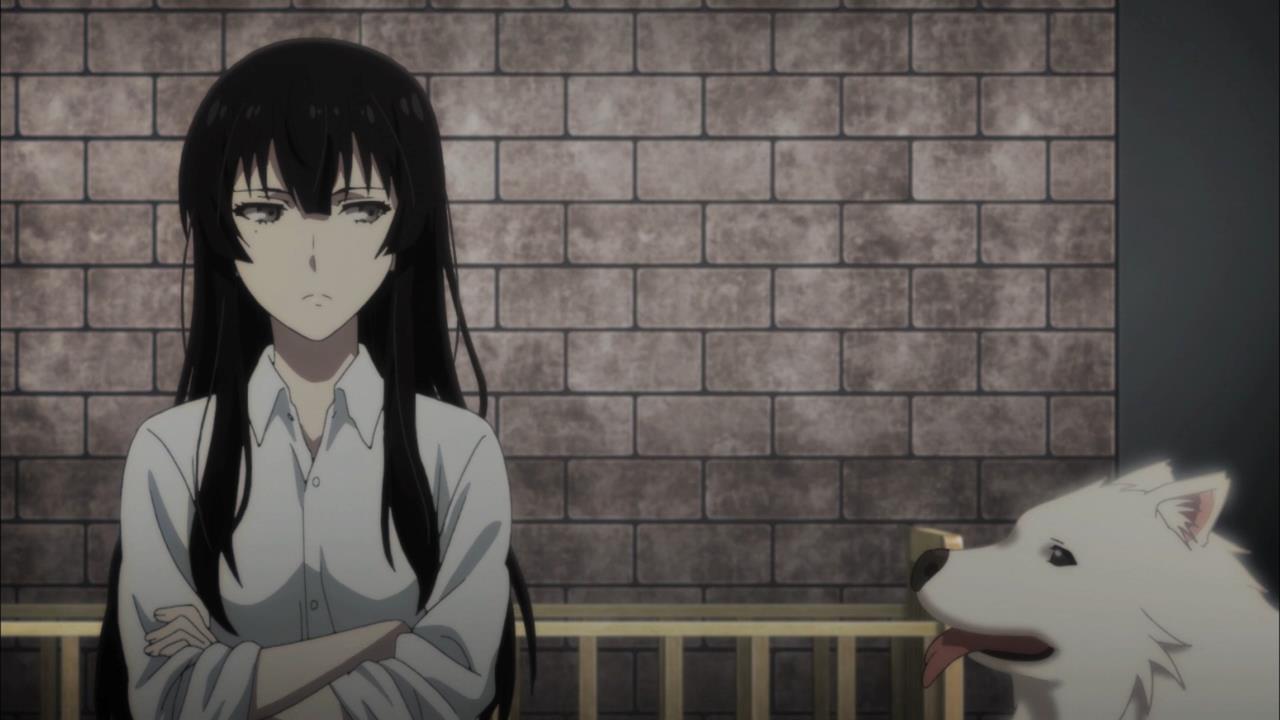
Sakurako, and a human skull. She and Shoutarou (not shown) solve mysteries.
The Good:
Sakurako looks beautiful, and I don’t mean just the character. The presentation of this anime went far beyond what it should be. If TROYCA, known only for their work on Aldnoah.Zero, wanted to prove they could produce a good-looking show without the help of A-1 Pictures, they get an A+ no contest. The backgrounds are gorgeous-looking, with immense detail and beautiful coloring that gives off a feeling of warmth and comfort. The movement is almost always immaculate, with fluid animation and characters that don’t just stand around doing nothing while another person is talking. The CGI also isn’t an eyesore, so kudos for that. The only aspect that disappoints me about the animation is the character designs. They’re serviceable, but they look like the typical anime characters you’d find from any random show, especially those made by A-1 Pictures.
This is only some of the beautiful animation this show has to offer
The music is also quite fitting. I can’t judge it fully, mainly because I can’t find it anywhere so I can listen to it on its own, but I remember it being nice enough. It built tension and created a calming atmosphere when needed. I liked the pianos when they were used. The opening was okay, though very well-animated, as to be expected of the rest of the show. The ending song barely caught my attention while I was watching the show, but listening to it on its own, it’s actually quite a nice song. I recommend listening to it. Voice acting is fine, nothing too outstanding but fits the show.
Opening:

Ending:

And, well, that’s really it. Onto the bad!
The Bad:
The main problem with Sakurako isn’t that it’s badly written. In fact, there is actually some good writing thrown in at some points. For example, the dialogue between Sakurako and Shoutaro feels natural, and you get the feeling the two knew each other for a very long time. Few anime are smart enough to easily establish a relationship like this, and it works in the anime’s favor. There are also some clever bits in the first episode that characterize Sakurako well, creating an interesting but still mysterious character. In fact, the anime is mostly serviceable. There’s nothing so wrong with it that it deserves to be condemned to the darkest depths of anime hell.
What’s wrong with this Beautiful Bones is that it’s only serviceable, and refuses to go anywhere with its interesting premise. It’s like coming across a person who’s naturally talented at basketball, but doesn’t play basketball because they’re lazy and decides to take the easy way out. You can respect his or her decision, but you also can’t help but feel like a lot of potential was lost. Sakurako has the makings of a solid mystery; its main detective character Sakurako is interesting and enjoyable to watch, the individual mysteries could have been interesting on their own, and again, the animation is great. However, in the end, all it does is meander into completely irrelevant and hollow side stories that don’t develop the important characters, establish any story beats, or are even all that interesting as stand-alone stories.
Sakurako and Shoutarou solving a mystery
Episodic anime are not automatically a bad thing in my eyes. If the setting and characters are good enough to utilize in various anecdotes, then I’m all for it. Take Kekkai Sensen, for instance: all the characters are fun, interesting, and well characterized. The side stories the show develops may not always be incredibly relevant story-wise, but they are character and setting-wise. For example, in episode 6 of Kekkai Sensen, it is established that racism against supernatural creatures exists. Leonardo Watch is also further characterized, as the episode shows how he can easily establish relationships with other loners, and truly cares about those he forms connections with. It’s not relevant to the main story, but it helps you understand the characters and the surrounding world.
Speaking of story, that’s the main aspect that separates Kekkai Sensen from Beautiful Bones: the former has an overarching theme and story that ties everything together in the final episode. This is what keeps it interesting on a more substantial level. As good as those individual episodes are, they can feel pointless in the long run without something tying it together. As stated earlier, Kekkai Sensen ties them together by developing either the characters or the setting, while weaving additional story elements together in the background. Beautiful Bones suffers from the exact opposite; all it does it meander, and nothing feels all that important.
Kekkai Sensen Episode 6, featuring Leonardo Watch and Nej

The show does have a bit of an overarching plot, or it was hinting at one at least, but aside from one episode I watched, nothing was developed. In other words, Beautiful Bones spends seven episodes out of eight dawdling around while barely acknowledging any kind of plot. The side stories it does present don’t develop the main characters or setting at all, making nearly all of them feel like a pointless waste of time. And, when something is a pointless waste of time, the result is an inordinately bored audience or people upset at negatively spending their time. On top of that, the anime decides to ignore what could’ve made these individual stories good by focusing on the wrong aspects within those stories.
For example, the show decided to give Shoutaro a quasi-girlfriend, named Yuriko. This wouldn’t be so bad, but the show kept on pushing that she is an important character because she’s literally involved somehow in the majority of the mysteries they solve. Some kid she looked after previously is in trouble. Her grandmother’s untimely death was discovered by Sakurako. Her grandfather’s paintings ending up in a victim’s house. She finds an envelope with someone’s wedding ring, and that mystery takes up an entire episode. I don’t know about any of you, but that is some contrived writing. Or, they live in a world of huge coincidences, but in an anime that tries to be realistic, I highly doubt that.
Now, having recurring characters, no matter how forced their recurrences are, isn’t a deal-breaker for me. If that character is interesting or contributes to the plot in any way, then I’m typically fine with it. Yuriko, on the other hand, is the definition of a generic and personality-less character. She doesn’t have any defining characteristics besides just being a “nice girl,” and crying for the camera every so often. It’s like she was written in because the show needed Shotaro to have a friend, not because she was integral to the non-existent plot. In simpler terms, she’s a useless plot device that creates filler so the show can continue to meander into stuff that has nothing to do with whatever story the show was trying to establish. Why is she focused on so much if Sakurako, an infinitely more interesting character, is basically left in the dust for the majority of the eight episodes I watched?
Yuriko
Sure, you could argue that Sakurako could get more focus in the episodes I didn’t watch, which is a valid complaint. I did read the plot synopses of the episodes I didn’t watch before writing this, though. I’m not about to make assumptions about a piece of media that I haven’t watched without at least learning what happens in the parts I haven’t seen. As it turns out, at least according to the episode descriptions, the only additional insight into Sakurako’s character is in the last episode, which depicts Sakurako and Shoutaro’s meeting. Again, not too bad, but it’s the last episode. Maybe it’s a fantastic episode that I’m stubbornly missing out on, but that still doesn’t change the fact that the show didn’t develop its main relationship further until the absolute last minute, and probably broke off whatever plot it was building up instead of actually going through with it.
I think what particularly puts the final nail in this anime’s coffin, though, is that there is no substance. I’m not talking about a show like Jojo, where even though it’s not deep it can still be enjoyed based on how over-the-top and insane it is. I’m more talking about a show that’s hollow, lacks personality, and feels like it was made in a factory. The creators seemed to only care about its presentation, but forgot to give the actual content a point. It’s like looking at a perfectly-done “color-by-numbers” drawing. Sure, it looks pretty and well-organized, but the creator didn’t think of coloring outside the boxes, or using colors other than the ones he or she was instructed to use. If they did, they’d have to use some more creative energy, which is not something that exists in Beautiful Bones.
Lately, I’ve been growing more and more sick of anime like The Asterisk War (easy target, I know) that lack any sort of human passion, and Beautiful Bones just further reinforces that disdain. It has its nicer moments, like the ending of episode 3, and anything that has to do with Hector the Dog is plain adorable. Despite that, I can’t say that anything exceptional was done to make it a good mystery, or even keep my interest beyond episode 8. What I did watch felt like a giant waste of my time, and as someone who really values her time, that’s the biggest insult an anime series can throw my way.

Conclusion:
In the end, Beautiful Bones is exactly like the bones it lovingly presents. It’s clean, polished, and looks beautifully crafted; but it is also cold, meatless, lifeless, and boring to look at after a couple minutes. I do not recommend watching this show, unless you want something extraordinarily but undeservingly pretty to look at.
Well, that's all from me. I'll see you guys later!
reade more... Résuméabuiyad

Tristan and Iseult: A Tragic But Perfect Romance

According to The Norton Anthology of English Literature, the romance genre “not only represents desire but activates desire in its readers: the pleasure we take in such stories derives from our desire for the reintegration of lives in a coherent and constructive narrative,” (Greenblatt 120). The genre is typically aimed at young adults, as a way of reassuring them that everything will turn out well in the end, despite all the odds. These types of stories also tend to emphasize how young people make mistakes due to their inexperience, which leads to even more of a desire to see a happy ending. Considering how confused young people can be about the future, it is no wonder that the genre has persisted for centuries. Tristan and Iseult is one of the most famous romances, and is an inspiration for many stories within the genre.
This story is known as one of the most classic romances in history, depicting a struggle, a separation, a person overcoming a problem, and the entire story coming together in a happy ending. Tristan and Iseult follows the famous tropes of romance in both obvious and subtle ways. The story is about two lovers, which is predictable for a romance plot. Circumstances and misjudgment cause the young couple to act rashly multiple times in the story. In fact, the most important aspect of Tristan and Iseult is the romantic trope of reassuring the audience. The story utilizes the idea of fate, and how heavenly forces are always on the side of the innocent, which can clash with societal norms. It is a way of telling the audience that, as long as they follow their hearts and are good people, their lives will turn out well, which is what ultimately makes Tristan and Iseult a powerful and effective romance.
The first paragraph of the story begins with the bard addressing the audience: “My lords, if you would hear a high tale of love and of death, here is that of Tristan and Queen Iseult; how to their full joy, but to their sorrow also, they loved each other, and how at last they died of that love together upon one day,” (Bédier). This quote is a basic description of Tristan and Iseult’s relationship. Their love is true, which is where the “joy” originates, but the “sorrow” has its roots in how their love is technically forbidden by society. Conversely, it is encouraged by heavenly forces, representing the main conflict of Tristan and Iseult. The last portion of the quote indicates how the couple’s happy ending is ironically their death together, as they can finally be with each other without the weight of the world’s expectations and restrictions forcing them apart.
Tristan is shown to be marked by God in the very first scenes of the story. For example, when Tristan is finished playing his harp for King Mark, the king relates Tristan to joy: “God loves good singers...For our joy did you come to this roof, stay near us a long time, friend.” Unlike King Mark, Tristan’s mother relates him to sadness on her deathbed: “In sadness came I hither, in sadness did I bring forth, and in sadness has your first feast day gone. And by sadness you came into the world, your name shall be called Tristan; that is the child of sadness.” These descriptions indicate that Tristan is associated with the contrasting emotions of both joy and tragedy. Tristan’s life will not be filled entirely with tragedy, despite his mother’s last words, and King Mark’s words act as reassurance for the audience that everything will be resolved. If Tristan’s life is only filled with tragedy, then it becomes hopeless, which defeats the purpose of a romance, a story meant to inspire hope and comfort.
For the romance’s target audience, the idea of the certainty of fate and destiny is vital. The audience’s intrinsic myopia causes them to fear that one mistake may have an irreversible influence on one’s life, while in actuality it may have a minor impact at best. So, when the concept of inevitable fate is present, the burden of not knowing the future can be alleviated. The audience holds credence and take comfort in the fact that everything happens for a predetermined reason. The idea of fate is also a reminder of how death, the one aspect of life that everyone has in common, is inevitable. In the context of the story, this reminds the audience of the character’s vulnerability, and subtly foreshadows how Tristan and Iseult’s love and death together is set into motion because of fate.
One of the main instances of fate intervening is how Tristan and Iseult came to meet. The collection of precise events that leads Tristan to Iseult strengthen the idea of fate, because realistically, these events are a collection of coincidences at best. The swallow bringing King Mark Iseult’s golden hair indicates that Iseult is meant to go to Cornwall. Tristan arriving in her kingdom to defeat a dragon, which coincidentally wins Iseult’s hand in marriage, is too contrived to be reality, unless heavenly intervention is involved. The story is only this carefully orchestrated when the plot reaches a point in which Tristan and Iseult are in need of heavenly intervention, such as when Tristan jumps off a cliff and is saved by a sudden gust of wind in a different part of the story, carrying him to safety. Without the presence of God or other heavenly forces, realistically, Tristan should die, and Iseult should never meet him. Another instance of fate guiding their destiny is how Tristan initially meets Iseult. His boat arrives in Ireland by sheer luck.
After his battle with the Morholt, Tristan is injured, and is sent away from Cornwall on a boat as he waits for death. The boat is unmanned, floating on the water without anyone steering it. The seven days and nights Tristan floats in his boat, and the forty days he waits before he leaves, is an allusion to the biblical story of Noah: God tells Noah to build an arc in seven days before He floods the world, and the flood will last for forty days (“Genesis”). In Tristan and Iseult, Tristan is akin to the world. He rapidly decays until he is brought to shore and healed by a potion, which is equivalent to the water pouring onto the Earth and healing it of man’s sins. The forty days is Tristan’s and the world’s rehabilitation period, until finally, they both are fully healed and are able to move on. The story of Noah is also similar to this portion of the story because it involves God’s interference, as Noah would have never known that his world would be flooded without God. After the flood, God promises to never flood the Earth again, but in Tristan’s case, his world is eventually flooded again with the elixir of love, leading to his love with Iseult.
The love potion is a plot device that furthers the idea of Tristan and Iseult’s fated but forbidden love. Initially, the love potion is a secret gift from Iseult’s mother to her servant Brangien. The intended use of the potion would have been to make Iseult fall in love with King Mark, which suggests that their marriage will lack a foundation of true love. In order to right this wrong, a heavenly force decides to shine the sun upon them, making the two thirsty and then providing the love potion as an innocent refreshment. As above, the potion represents the second forbidden flood of the Earth, the one that God promised would not happen. The question of how their love can be both intended and forbidden simultaneously arises. Fate believes the two should be together forever, but society opposes their romance. This is the major conflict of Tristan and Iseult, and is one that is only resolved by their death, which is why Brangien declares they “drunk death together,” by drinking the love potion (Bérdier). Now, it is only in death in which the two can properly be together, and in life they must be separated.
One of the most important aspects of a romance story is the intrigue of separation, because it acts as a potential challenge to a couple’s relationship. While apart, the lovers may be tempted by other people, or fear that the other has died, which makes it all the more satisfying when the couple reunites. The very first time Tristan and Iseult are separated is because the king’s advisors hate Tristan, and notice his love for Iseult. Seeing an opportunity to make Tristan suffer, they attempt to reveal Tristan and Iseult’s secret romance to the world. The text indicates that this separation is not what fate desires, because the bard describes Duke Andret, the King’s main advisor who initiates their separation, as someone “whom God shame[s].” The fact that these advisors are referred to as “felons” also designates how they are the villains of the story, going against the fated love of Tristan and Iseult. Duke Andret and the other advisors represent the society that wants to keep them apart, as they are the main reason the two are separated so many times.
Another instance of the couple being separated is when the King discovers the runaway couple sleeping together with a sword between them. As A Sword Between The Sexes explains, “There is...hidden or flaunted, a sword between the sexes till an entire marriage reconciles them,” (Van Leeuwen 56). In other words, it is a symbol that represents the separation between a man and a woman before they fall in love and get married, which is the reason it takes King Mark by surprise. He initially accuses them of being in love and defying him, but seeing this literal symbol of their separation convinces him that he is wrong, that they are in love but are not sexually active, and that he should forgive them. Ironically, it is a display of separation that saves the couple, which further implies that the only way the couple can live on Earth is through severance.
Society does not want Tristan and Iseult to be together, as it causes the leader's pain. One example is Tristan’s claiming of Duke Gilian’s dog. His act is a showcase for how much he loves and misses Iseult, to the point where he would make his new ruler suffer for her. This goes against what he learned from the Governal’s teachings, as a knight’s main duty is to serve his leader faithfully and completely. He even makes a plan to win the dog, because he knows how much the duke loves his dog and would not give it up under normal circumstances. While this does display how strong the love between Tristan and Iseult is, this scene delineates Tristan in a much more negative light than previously.
Tristan is always described as “honorable” and “brave” prior, but in this scene, he is never referred to as such. The only phrase that indicates Tristan’s knighthood is when the duke says he is a “God-sent guest”, but those are not the words of the bard. Ironically, this act against the duke is in vain, as Iseult realizes that Tristan now suffers instead of herself, and she throws the bell away. This indicates how much Iseult loves Tristan, but it also shows how Tristan’s act of defiance ends with both of them suffering again. Their suffering further implies how society’s rules do not wish for either to be happy in life, because it hurts King Mark and has now hurt Duke Gilian, which is a malevolent act in the world they live in, as the code of conduct indicates that Kings are to be respected.
Tristan’s disguise as a commoner also reflects his disobedience. What is ironic about the scene where Iseult screams “Fool!” at the disguised Tristan is that she does not know she is actually speaking to Tristan, but accurately describes Tristan with her insults. It is true that Tristan “wrong[s] all knighthood” for her sake, and it is true that he is a “fool from birth” because of his actions. Tristan’s ugliness as perceived by everyone else is also a representation of how society views him, as a dirty man who loves the queen and disobeys his kings. The only other characters to be viewed as such are the lepers, though to a much lesser degree, which shows how Tristan’s actions against his kings and dukes are extremely reviled in society. Tristan’s exit marks the couple’s final separation, as they will never see each other again until they die.
The next important aspect of a romance is how young people misjudge their actions and what the subsequent repercussions will be, which is displayed in Tristan and Iseult. The first instance of this is when Tristan and Iseult run away from their execution. They may be running away to escape from their deaths, but they flee without a plan. Neither knows where they will go, how to survive in the forest without the commodities, or what they will do should they get captured again. As it is told to the audience shortly afterward, they starve, unable to properly take care of themselves. God may have saved the couple from a shameful death via execution, but even when they are together, they are unable to live within the society that is against their relationship, and will constantly be running away. Nevertheless, they go on, venturing deep into “the Wood of Morois,” ready to encounter even more suffering in their journey.
Tristan’s refusal to repent when an old man recommends that he should is another sign of his shortsightedness and misjudgment. For a man raised as a chivalrous and honorable knight, it is rather odd that he feels no guilt over committing one of the most severe crimes a knight could commit. He even denies that he commits a crime. At this point, Tristan is not thinking logically. He is acting solely based on love, and  he is ignoring the consequences. The logical action to take is to turn himself in, beg for forgiveness, and give Iseult back to King Mark. This is akin to how young people believe their mistakes can never be forgiven, and how they tend to run away from their problems as a result.
After they discover the king has found them, Tristan and Iseult finally become aware of their predicament. They are foolish for not believing the King could forgive them. This marks the resolution of their earlier myopia, because they realize they can no longer live this life of running away without hurting the other. It is a decision between living apart and reclaiming their honor, or living together and slowly dying. In the end, they choose the former, despite the despair it will cause them. Tristan’s last statement, that “it would have been much better if he had killed me in my sleep” indicates that he knows he can not be together with Iseult if the king is willing to forgive them, and that he has to go through the pain of giving her up, which is what eventually happens.
The couple’s attempt to stay in the same kingdom after King Mark orders Tristan to leave Cornwall is another example of their misjudgment. Unlike previously, they rapidly realize that their relationship simply will not work in society, signifying that the two fully understand the implications of their impossible situation. Iseult then swears to King Arthur that she no longer loves Tristan, and Tristan leaves. This is the beginning of their second separation, as they will only see each other once again before they both die. Instead, they must live the rest of their lives apart. Thankfully, fate does not intend for them to be separated forever.
When Tristan is on his deathbed, he wishes to see Iseult again. Iseult obliges, but her ship encounters a storm, and she cries out, “God does not will that I should live to see him, my love, once - even one more time. God wills my drowning in this sea,” (Bérdier). She later has a strange dream, and she reaches the conclusion that she “will never see her lover alive.” While this does contradict earlier instances in the story of God helping them stay together, such as when they escape their execution, it also furthers the idea that the couple will finally be together when they are dead.
God may be keeping the two apart to prevent Iseult from seeing her lover suffer and deteriorate from the poison, and instead see him perfectly happy and healthy in heaven. This is exactly what happens, as Tristan dies and Iseult passes away due to grief mere minutes afterward. It is made clear that the two are in heaven together by their burial tomb. The bard states, “But in one night [after their death] there sprang from the tomb of Tristan a green and leafy briar...it climbed the chantry and fell to root again by Iseult’s tomb.” The briar is a leafy and flowery plant that, in Tristan and Iseult, symbolizes the couple’s connection, even after death.
Tristan and Iseult is a romance because it fulfills many of the requirements of a typical work of the genre: young people who make bad decisions, reassuring the audience that everything will be okay through a happy ending, separating the couple to test their loyalty to each other, and ending with the couple reuniting. Many elements of the elements are not stereotypical of romance stories. Tristan’s disloyalty to his king and the ultimate deadly fate of the lovers are two examples. Tristan and Iseult is undoubtedly a romance, not because it follows the tropes, but because the story’s main message is that love will eventually conquer all, and if two people love each other, they will eventually be together, no matter what. Every story, regardless of genre, is normally about a protagonist overcoming a problem, and in romances, the problem usually has to do with love. In “Sir Gawain and the Green Knight,” it is Gawain’s love for his knightly duties that eventually allows him to succeed. In The Odyssey, it is Odysseus’ love for Penelope and his kingdom that drives him to return home. In Tristan and Iseult, their love for each other is the problem, and the two have to learn how to live in a world that is averse to their relationship. The tragic love story of Tristan and Iseult is ultimately about the complex and enduring nature of true love, and its power to overcome all when driven by fate and challenged by society.
Works Cited
"47 Bible Verses about Leprosy." What Does the Bible Say About Leprosy?Open Bible, n.d.


Bédier, M. Joseph. The Romance of Tristan and Iseult. N.p.: Project Gutenberg, 2004. Print.


"Genesis 5:32-10:1." BibleGateway. Biblegateway.com, n.d. Web. 13 Dec. 2015.


Greenblatt, Stephen, and M. H. Abrams. The Norton Anthology of English Literature. 9th ed.
Vol. 1. New York: Norton, 2006. Print.


Stewart, Van Leeuwen Mary. A Sword between the Sexes?: C.S. Lewis and the Gender Debates.


Grand Rapids, MI: Brazos, 2010. Print.

reade more... Résuméabuiyad