Pages

.

First Impressions: orange and Regret (Episodes 1-4)

Every so often, I like to sit back and watch simple, emotionally-powerful stories centered around characters going through difficult problems. Shows like OreGairu, White Album 2, and Free! wouldn’t be favorites of mine if that weren’t the case. I like these types of shows because, most of the time, they're the most insightful into how teenagers (or people in general) deal with issues and grow stronger as a result. These are anime that give viewers valuable life lessons, and can teach them how to confront their own issues and worries.
How is that relevant? Well, after watching shows like The Flash, Arrow, and Gurren Lagann, I felt compelled to watch a show, whether it be anime or otherwise, that was more down-to-earth. Anime is typically the best medium for these types of shows, so I decided to browse around. Upon looking at what this anime season had to offer, I chose orange. Oh, and in case anyone was wondering, I do realize Amanchu exists, and rest assured; I will finish it, as it has been excellent so far. This post, however, is about my first impressions of orange, and partially predicting how it will pan out. Light spoilers ahead, so if you’ve seen up until episode 4 of orange or don’t care, let’s get started.
Orange takes place in the city of Matsumono, Japan, and follows Naho Takamiya, a second-year high schooler. One day, she gets a letter from her future self, warning of her sorrowful future. These letters keep on telling her to do things differently, so that she and her friends can stop feeling regret over actions they did not take or did not take correctly. The letters’ main person of interest is Kakeru, the new transfer student that Naho begins to have feelings for. The letters consistently warn Naho that Kakeru does not have a future, and that measures need to be taken so that he does. Determined to save Kakeru, Naho takes the letters’ advice.
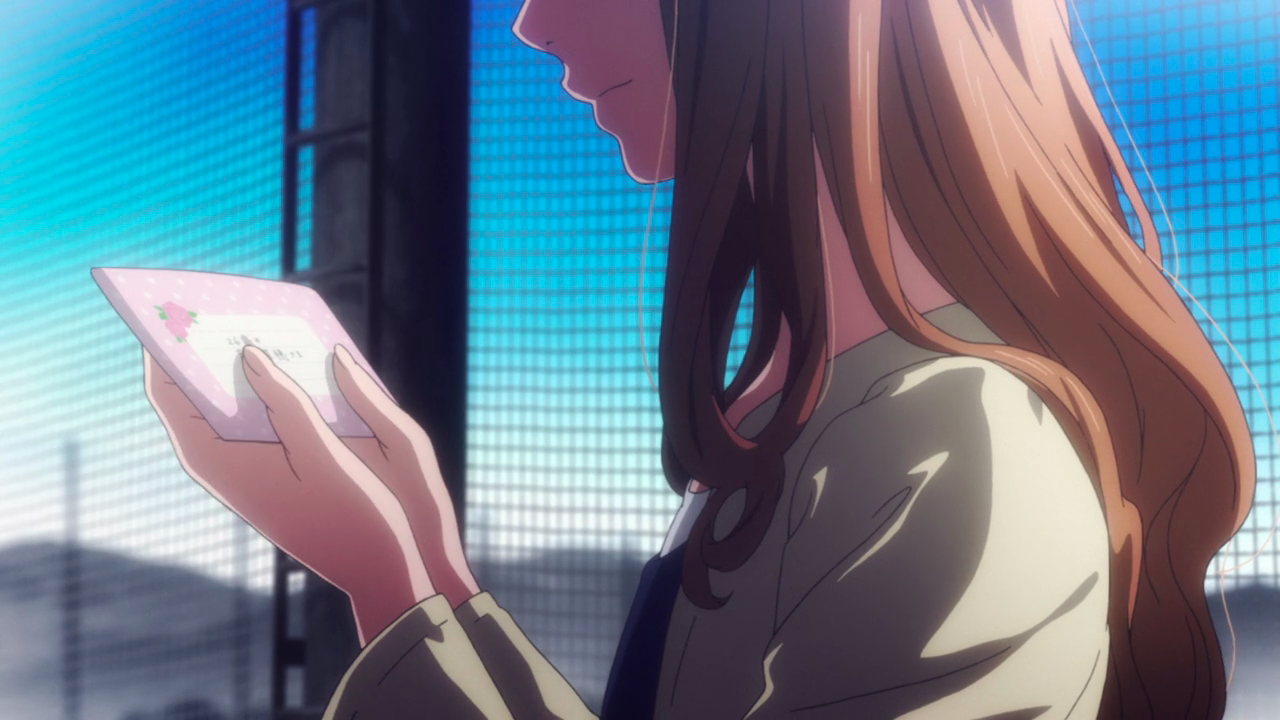
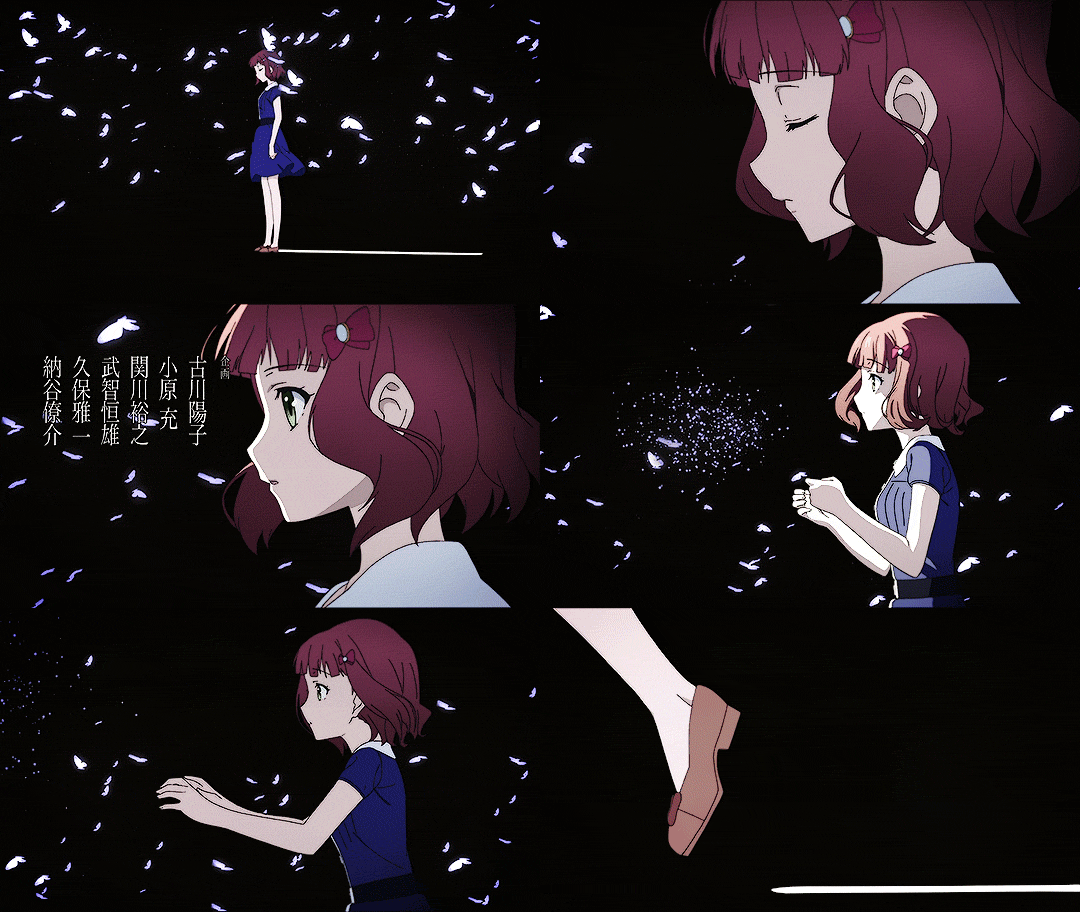
Naho, ten years after her second year of high school
The premise is a nice twist on the typical high school romance formula, though it is very reminiscent of ERASED. You know, otherwise known as the show that everyone suddenly stopped talking about despite it splitting the community in half so ferociously that I had to make a video about it telling people to calm down. If you don’t see what I’m saying, both involve a future self communicating with a past self to save another person from certain death. The circumstances are different, obviously, but it is a glaring and curious similarity. This year in general has had an inordinate amount of “going back in time” shows, and while they definitely aren’t the most prevalent, it’s an odd connection.
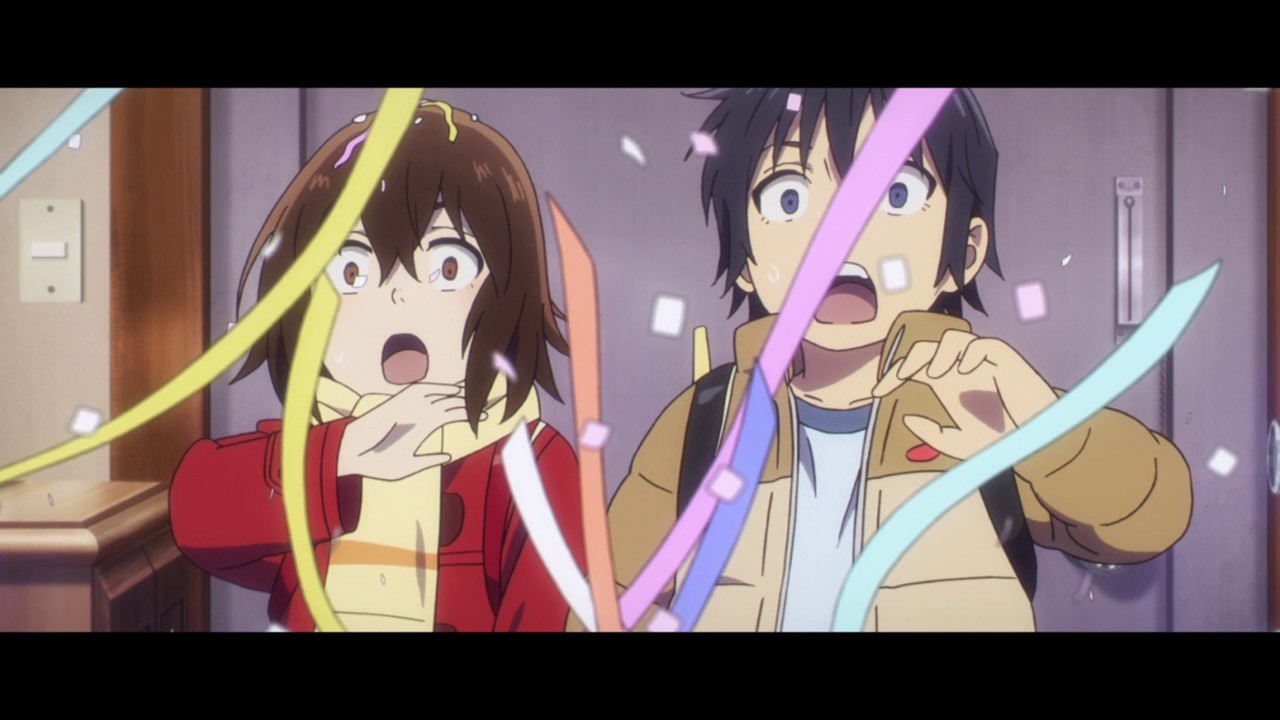
Kayo from ERASED / Boku dake ga Inai Machi
That is besides the point, though. Orange is as much about time travel as The Asterisk War is about being good, because the main focus of orange appears to be character interaction and consequence. Yes, many of Naho’s actions depend on the letters, but the show concentrates more on the results of those actions and how they either positively or negatively impact the future. For example, whenever she talks to Kakeru alone, Kakeru is noticeably happier. When she doesn’t, his smiles feel more fake, and he seems all the more mysterious. Or, when she’s feeling troubled, her friends notice her distress. The point is, everything you do has consequences that can change the future, even things that appear to be completely irrelevant.
Naho decides to go up to bat, as instructed by her future self, but her future self clearly didn't warn her about the dangers of not wearing a helmet
Narratively, this subtly ties into the quasi-time travel element perfectly, but doesn’t bring time travel to the forefront like other shows do. However, this does unveil one of my main issues with these ideas so far, and that is how the letters negatively interfere with Naho’s life. I’m curious to see how the show explores how the lack of regret impacts the future, since regrets are ultimately part of what makes us who we are. If everything went well, after all, then we wouldn’t have mistakes to fix, and we’d never improve as individuals. The fact that orange has ignored this thus far, especially since I’m a little less than a third of the way through, is worrying to me. I’m sure it’ll have some relevance in future episodes, since the show has been too smart to completely disregard this perspective, at least so far.
Without regrets, we don't change
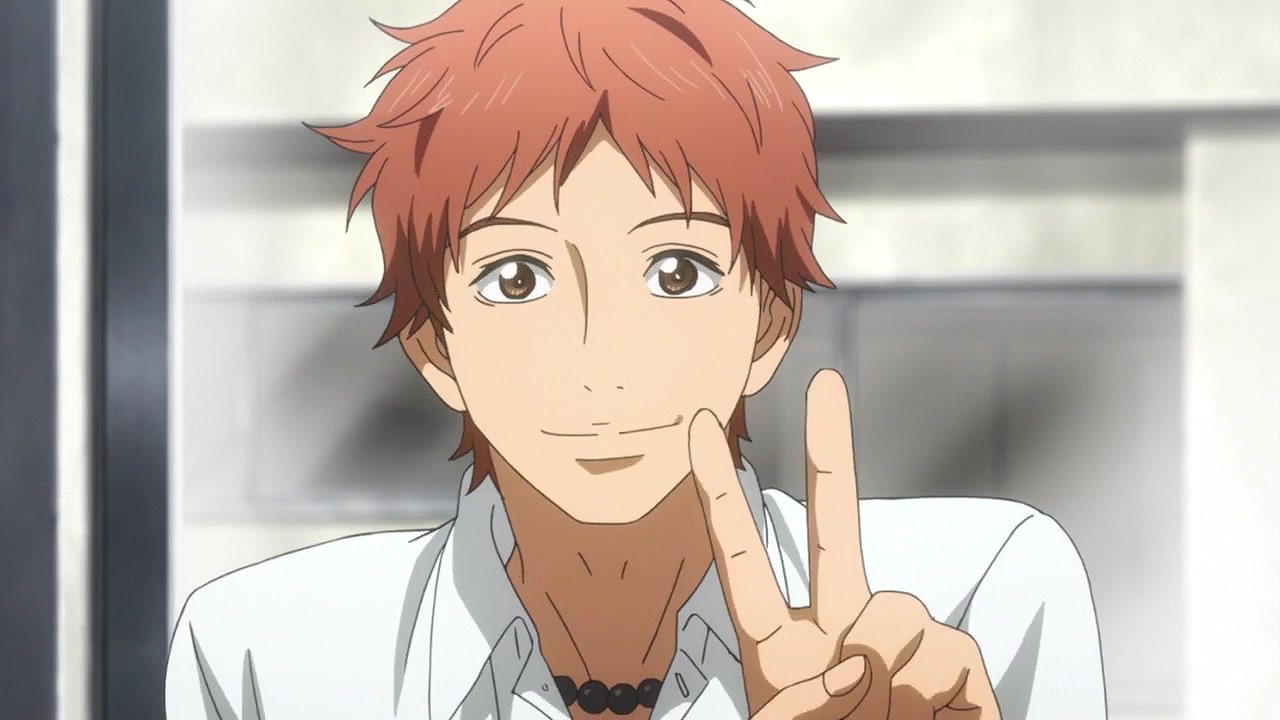
Moving on, the main aspect of orange that holds this show together isn’t the time-travel stuff, but the well-defined characters. While it is true that the characters’ personalities are simplified, due to there being many characters, you do get a sense of their personalities and how they would act in certain situations. Naho is believable as a person who sacrifices her own desires for the sake of others, Suwa is a kind and lovable joker, Azusa is always cheerful and bubbly, Takako is cool, smooth, and pleasant, and Saku is funny and...there most of the time. Yeah, he's the character that gets the shaft the most, but he's not bad.
Going around the circle to Naho, the characters closest to the viewer in the foreground, and back: Naho, Azusa, Saku, Suwa, Takako, Kakeru
Out of all of them, Kakeru is definitely the most interesting and developed. I haven’t quite seen a character like him before, mainly because of the intense visual storytelling surrounding him. From the visuals and cinematography, to some of his instances of dialogue, to his voice actor doing a terrific job, he seems like a person who is extremely depressed most of the time. Yes, he does smile and have fun, but it rarely feels genuine, and he doesn’t get as involved with his group of friends as one would think. There's an aspect of his mannerisms that just feels distant, like he's barely paying attention to his surroundings half the time. The only peak we get into why he’s like this is that his mother committed suicide, and while that is certainly tragic enough to send anyone into a downward spiral of depression, it’s implied that there’s more to the story than just that.
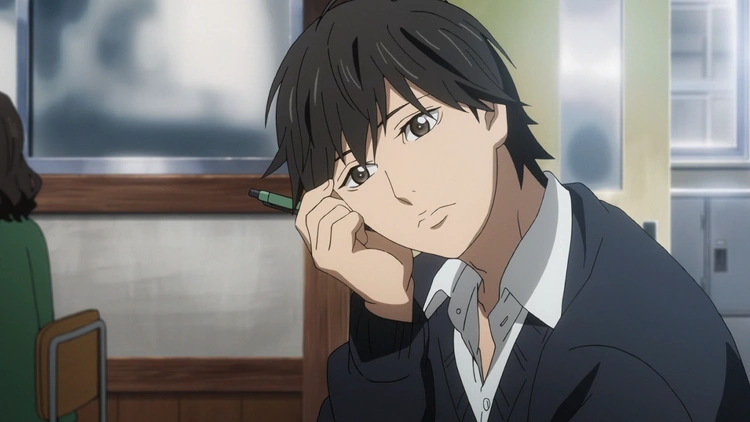
Kakeru always looks like he's pondering something sad
Speaking of visual storytelling, the cinematography and directing in this show are outstanding. The visuals always seem to make you feel uncomfortable, with strange angles, spending too much time on a certain shot, or its constant use of asymmetry. These choices keep the viewer on edge, wondering if something bad may happen as a result of someone’s actions. The colors palate is very subdued, with greys and washed out greens being the stars of the show. This gives the show a unique visual flair, as no other romance (or slice-of-life for that matter) really looks like orange at all.
Gotta love those darker shades and grey, subdued feeling to everything
The backgrounds are beautiful, and the character designs are...interesting. Sometimes the designs work, but you can tell that they were particularly hard to animate, as other times the characters look more like aliens than humans. I haven’t checked out the manga, but from the looks of it, most of these designs look better in their original form. Outside of the buggy transfer from drawing to animation, the actual character animation is pretty good, with some off-modeling here and there, but it could be worse.
Here is a rare instance of "quality" hands, and the character design somewhat faltering
Another interesting visual aspect of orange is its use of montage to display the passing of time. While this isn't a particularly new way to use montage, there's a simple pleasantness to watching Naho's friend group hang around the city to the tune of happy music. It gives the viewer a true sense of the group's bond, and how the group just has fun being together. My favorite montage is when Naho is thinking about giving her lunch box to Kakeru in episode 2. Whatever the teachers say in their particular classes fades into the background, emphasizing how Naho's focused on the lunch box and not her studies. The cuts go from class to class, and there's a constant focus on Naho looking anxious. It's a brilliant way of showing how nervous Naho is through visuals and simulating the passing of time.
(Go to 10:59 to watch the scene, or click here.)
As for the music, it's decent slice-of-life fare, though sometimes the sound mixing is a little off. There were some moments where the music overshadowed the characters’ voices, but that may have been because I watched some episodes without headphones or whatever. The opening is wonder-bread generic from a visual standpoint, and the song feels more like a stand-in than anything that was truly made for the show. If anything, the opening song doesn't feel like it quite fits with orange's more melancholic tone. The ending song is also forgettable. On the other hand, I’d say the voice acting is excellent, especially the people who voice Kakeru, Naho, and Suwa. The actors truly breathe life into these characters, and I can’t imagine anyone else playing them.
The voice-acting is top notch
Overall, orange’s first four episodes were rather enjoyable, with ups and downs. It isn’t anything I’d call amazing yet, but it has the potential to explore its ideas surrounding regret and choice. Heck, why introduce them if you won’t actually do anything with those ideas, right? I’ll definitely be continuing this one until the very end, and maybe I’ll do a Final Thoughts post or even a full review when it finishes. Until then, this has been HSMediaNerd, and I’ll see you guys next time.
reade more... Résuméabuiyad

Bojack Horseman: The Depressing Purpose of its Anthropomorphic Animals


Anthropomorphic animals are a staple of cartoons as much as explosions are a staple of the action genre. Whether it just be talking animals or animals that act and walk like humans, these imaginative characters have found their way into our culture and grew along with the technologies of animation. So, it should be no surprise that anthropomorphic animals also made their way into adult cartoons, specifically in the Netflix show Bojack Horseman. What’s interesting about the main anthropomorphic animal characters of Bojack isn’t the fact that they’re animals walking around and living amongst humans. Instead, the intrigue comes from what the animals those characters are based on represent, and how those animals tie into the show’s main ideas.
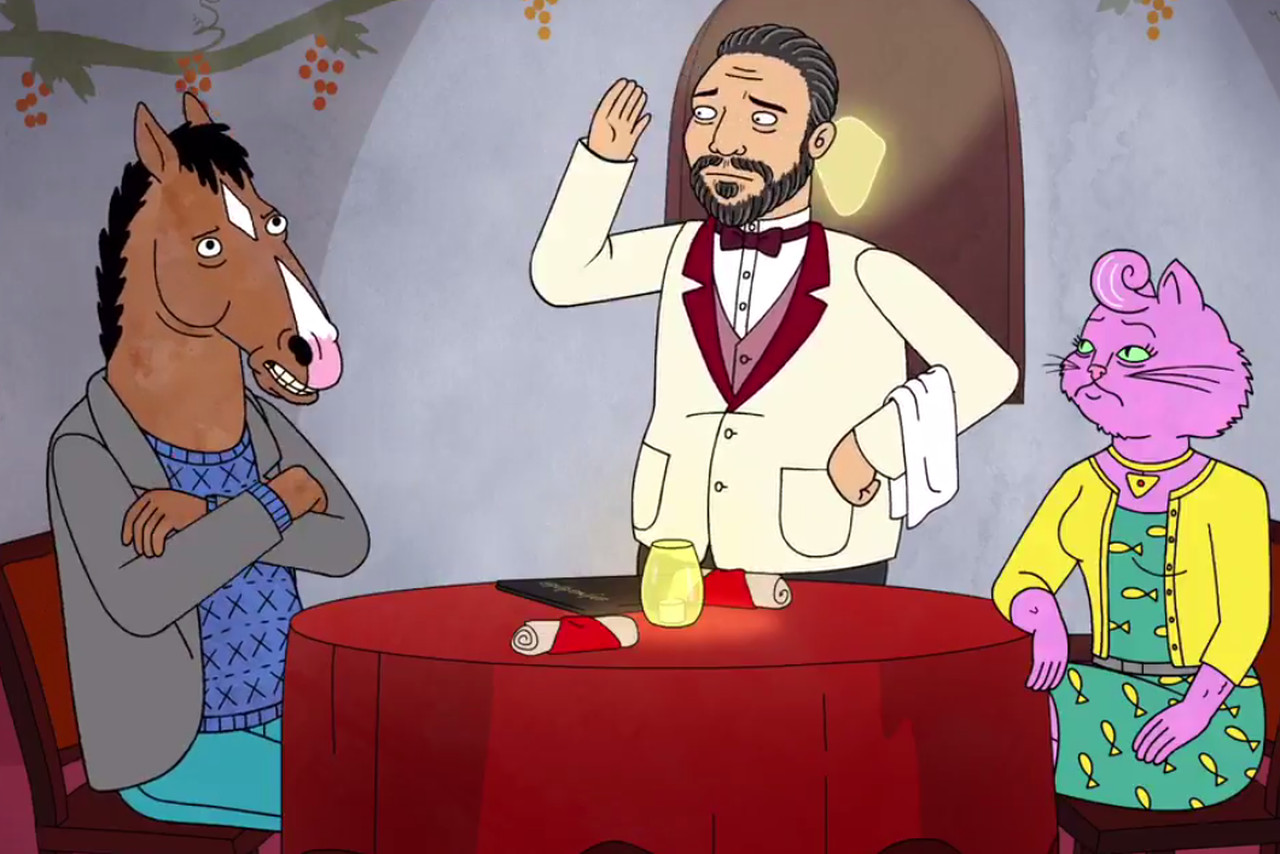
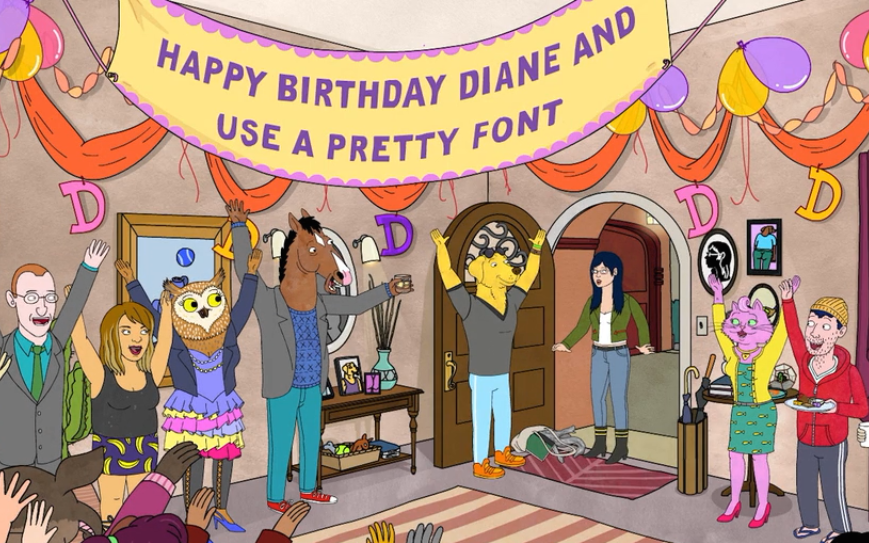
            The three main anthropomorphic animal characters are: Bojack Horseman himself, a has-been family sitcom star and sardonic alcoholic; Mr. Peanut Butter, a former star of his own sitcom who’s incredibly cheerful and optimistic; and Princess Carolyn, Bojack’s snarky, brutally honest, and sly agent. Each take on the form of a different animal, with Bojack being a horse, Mr. Peanut Butter being a yellow labrador retriever, and Princess Carolyn being a pink persian cat. One aspect that these animals all have in common in the real world is their reliance on the human race.
            The dog and cat are obvious examples of this, and it’s also reflected in their personalities. Mr. Peanut Butter is always happy, seemingly oblivious to the fact that he’s a mere tool used to make viewers happy. He revels in his public attention, in his kindness to Diane, and will do anything to please those he loves. Heck, he even admits this when he gives Diane a pendant: “I am D-pendant on you.” This sounds very much like the behavior of a dog, but it’s implemented so subtly that it feels like a human trait. He’s a character so obsessed with giving to those he loves, whether they be his fans or his fiancé, that he ignores what people may actually want. This is like how a dog may roll over when all you want her to do is sit; she overachieves despite you not instructing them to. While a lot of Mr. Peanut Butter’s ignorance and lack of focus on reality is mostly made up for laughs, it all serves the purpose of reinforcing this idea, this complete idealization of some audience that laps up his every action.
            For Princess Carolyn, her connection to this subservience is much more subtle, but then again, so is that of a normal cat. When I think of a cat, I think of a sly, indifferent creature that hangs around, watching every movement and springing at opportunities of self-gain. They also live in a human’s house, which is where they create their own territories and map out their surroundings. This sounds a lot like Princess Carolyn’s character. As a talent agent, she is reliant on her clients for money - her mostly human clients - and springs at any opportunity to gain money. She throws herself into her work because it’s the only thing in her life that keeps her going, but in the end, her work doesn’t benefit her, it only really benefits those she finds jobs for. In the end, all Princess Carolyn amounts to is a depressed cat trying to find happiness, as is explored in season 1 episode 7.
            Now that we’ve covered the cat and the dog, what about the horse? The horse isn’t a commonly subservient animal to humans anymore, right? Well...this is where it gets slightly more complicated. Firstly, it is important to note that, historically, the horse has been humanity’s means of transportation across land long before trains, planes, and automobiles (see what I did there?). The horse was a symbol of power, giving warriors higher ground during battle and made the humans riding them look imposing and dignified. If you need proof, just look at the famous painting of Napoleon, or do some additional research about transportation; the horse was everywhere.
Nowadays, the most horses are used for is to give horseback riding lessons, give rides through the city for no real reason at all, race in the horse races, or help with farming. The animal doesn’t have an incredibly useful place in typical human society anymore, especially if you live in a metropolis or in the suburbs. It feels like the horse has faded into the background, a mere shadow of what it once represented for humanity, especially Western Society. Transportation has evolved, so the horse has become a has-been, a relic of an older era, much like Bojack Horseman himself.
Bojack was the star of an incredibly popular 90’s sitcom Horsin’ Around, but has since gone completely downhill in terms of everything. His life is aimless, deprived of a purpose because his audience has moved on to bigger and better things, like how humanity’s reliance on the horse has almost completely faded over time. Unlike Mr. Peanut Butter and Princess Carolyn, however, Bojack seems to be completely aware of his subservience to humans coming to a complete halt, and struggles to find something else to do with his life. In a way, the horse’s lack of relevance and Bojack’s lack of relevance tie together perfectly, since both are incredibly depressing to watch.
Ultimately, Bojack Horseman uses anthropomorphic animals that are subservient to humans as a metaphor for how celebrities or the people tied to celebrities are subservient to their fans, audiences, clients, or otherwise. Without us, the people consuming their content, these actors would be out of a job and lack a purpose in life. This perfectly leads into an exploration of the tragic has-been, the celebrity whose fame has disappeared and whose name has faded into obscurity. The lack of attention leaves the has-been depressed, alone, aimless, and constantly attempting to get back into the spotlight. Much like how the horse in captivity used to be a vital aspect of humanity’s society, Bojack Horseman used to be a relevant and beloved star. Now, both seemed to have lost their place in the world.
Well, those were some words about Bojack Horseman. I’ll probably write more about this show when I’m actually finished with it, but for now, if you haven’t checked it out, I highly recommend it. This has been HSMediaNerd, here with something not anime-related for once, and I’ll see you guys later!
reade more... Résuméabuiyad

Spring 2016 Anime First Impressions

Well. I would say that it’s been a while since I’ve directly covered seasonal anime…but it really hasn’t. After making three videos about anime from 2015, which took up a lot of time and barely seemed to express my thoughts on any of the anime I was listing, I nearly vowed to never make content about seasonal anime again. Yet here I am, writing about Spring 2016’s season of anime. Why, you may ask? To put it simply, this season actually seems to be pretty fantastic. While I haven’t seen everything, many interesting shows have emerged, either as surprises or as expected, and everyone’s been talking about it. Why not hop on the bandwagon and share some of my thoughts, then? Let’s get started.
Space Patrol Luluco
Episodes Seen: 2
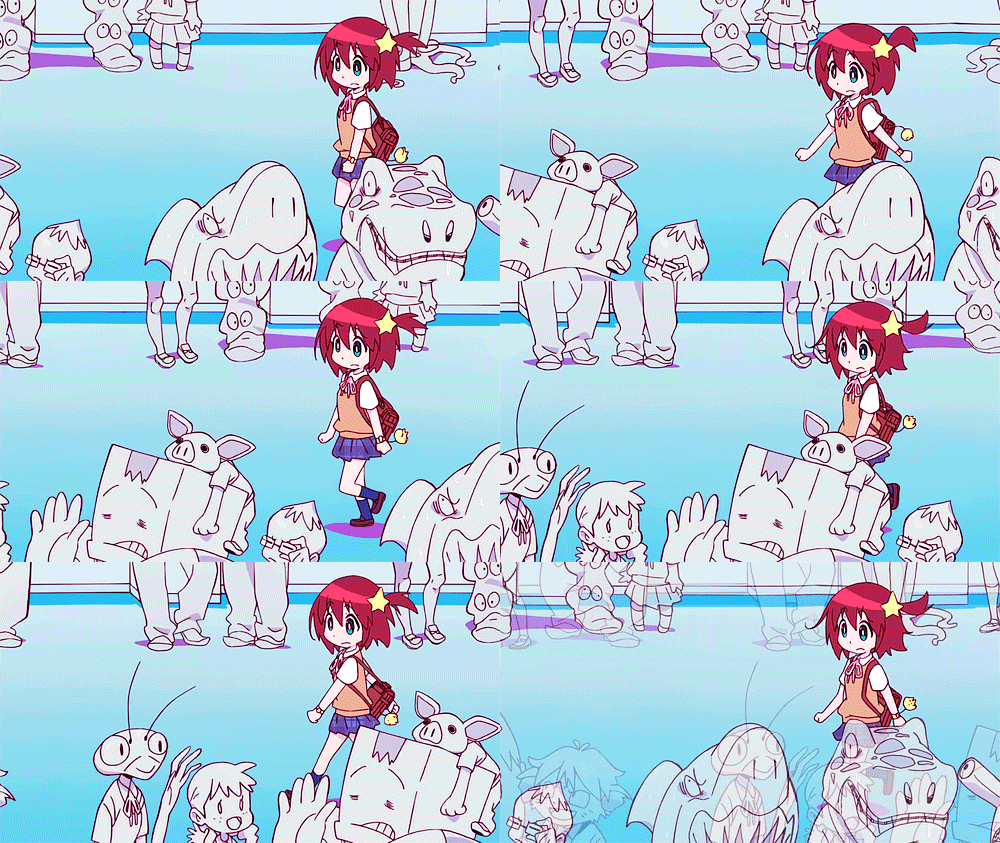
This show is probably the most adorable, zany, and charming show this season. While it is a short, and there isn’t a lot in terms of story and character to talk about so far, the world and scenarios are wacky and very entertaining. It reminds me of the more comedic scenes from Kare Kano or Kill la Kill, except that the over-the-top comedy is the entire anime. If those were your least favorite parts of those respective shows, you’re probably not going to like this one very much. However, if you’re in need of something that’s cute, funny, easily digestible, and feels very much like a Trigger-Gainax show, this is one to check out.
Rating: Will continue for now
My Hero Academia
Episodes Seen: 1
            THE HYPE IS REAL! YEEEEES!
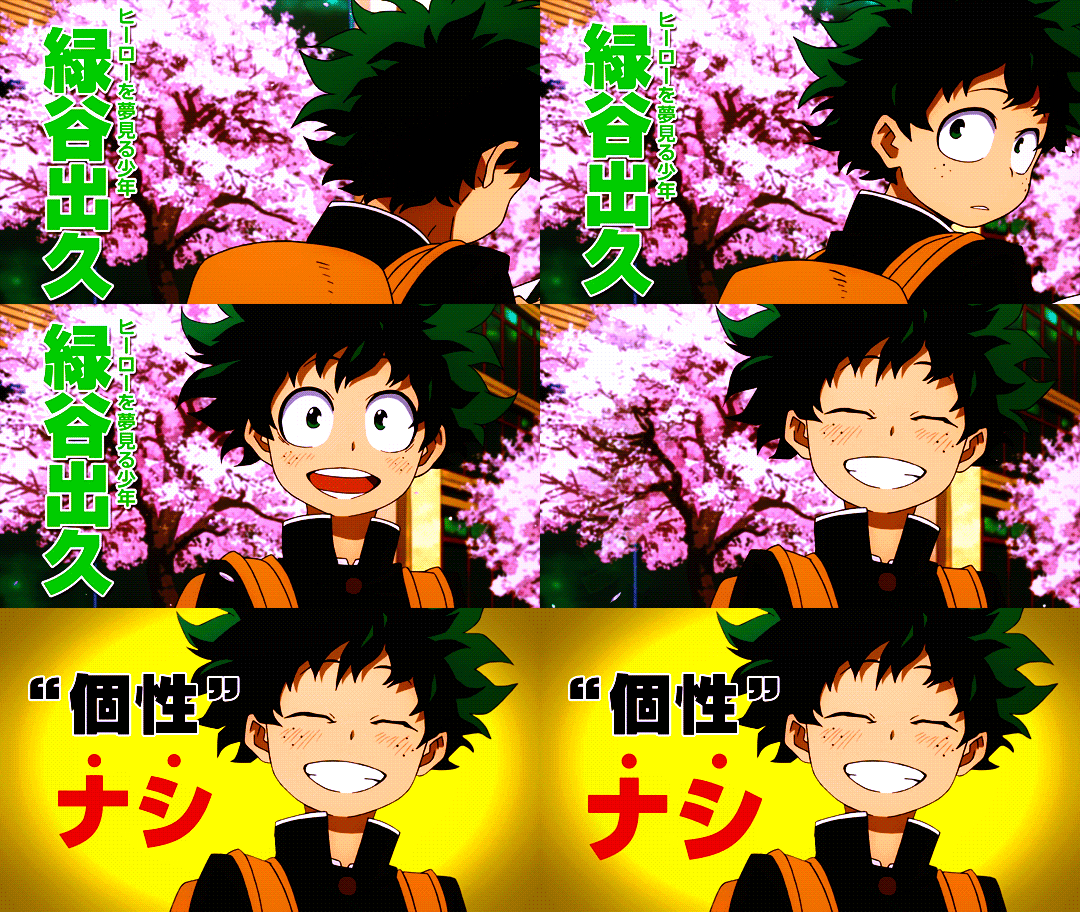
            Okay, I won’t be like most of the people who are hyping it up for the sake of hyping it up. With that said, I was extremely satisfied with the first episode of My Hero Academia, and not just because it’s an extremely accurate adaptation of one of my favorite manga. Well, that is part of the reason, but more because BONES just captured what I love about this story: the genuine feeling of effort and care the creators have for it. It’s hard to describe what exactly gives me that feeling without spoiling everything, but this is probably the best popcorn material one can find in anime, as it has one of the best combinations of cheesy one-liners and genuine character emotions that I’ve seen.
The characters aren’t the most unique, but that’s not a problem when their personalities are well-developed, and they are. Each has their own reasons for acting the way they do, which is more than I can say for other shows that forget about character motivation entirely. The animation is great, and even though they probably won’t appeal to everyone, the character designs are unique and really make the show stand out among its peers. The story hasn’t gotten to the better parts yet – we are at only episode two after all – but the first episode was definitely a solid introduction. If you don’t like anime like this, My Hero Academia probably won’t change your mind, but as someone who does, this is a real treat.
Rating: Will watch until the end
Mayoiga (The Lost Village)
Episodes Seen: 2
            I haven’t watched any of the “actual” comedies of the season yet, but unless they’re truly hilarious, Mayogia automatically wins comedy of the year from me. The genuine level of terrible writing, awkward dialogue, strange and unrealistic characters, and out-of-place music is honestly baffling to me. Nothing about this show makes any sense, and it’s to the point where I’m wondering if it’s intentionally bad or completely ignorant of its blatant issues. It's open to both interpretations, since you can always make the argument that no one is stupid enough to mess up a piece of entertainment this badly, but just remember: Birdemic, The Room, and Mars of Destruction exist. Either way, I’m having an absolute blast watching this terrible/secretly brilliant show, and laughing all the way.  
Rating: Will continue for now
The Asterisk War: Season 2
Episodes Seen: 2
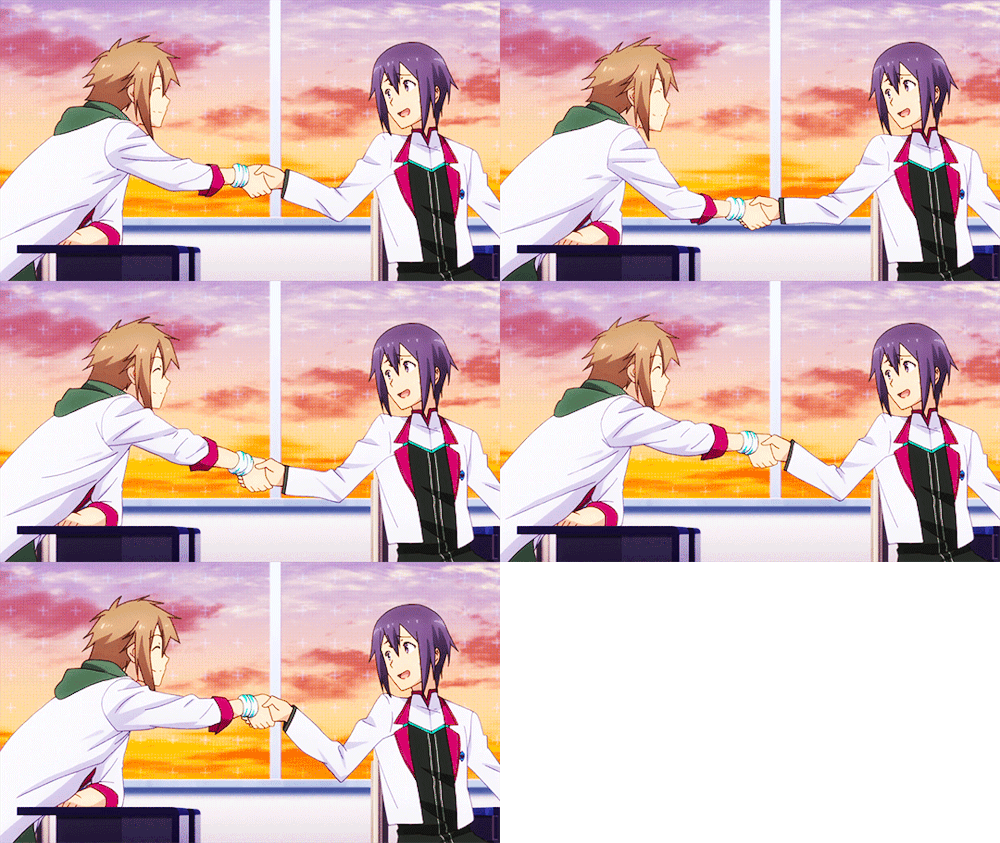
            Speaking of terrible shows, here’s the sequel to my least favorite show of 2015, The Asterisk War! Or…a mildly improved version of it? Before all of you immediately unsubscribe/unfollow/unfriend/block me for merely suggesting that I may somewhat like a show that I and everyone else previously deemed horrible, I would like to point out that I still don’t like this show very much. The characters are all hollow shells, the world doesn’t make any sense, the sound mixing and design sounds off, and it seems to follow every anime cliché in the book. In other words, this anime still represents all the aspects I hate about modern anime. However, this season of The Asterisk War actually isn’t nearly as bad as I thought it would be – if anything, there are actually a few elements I like.
            For one, the directing and cinematography have taken a step up. The first season was extraordinarily boring to look at, but this season is trying out some new visual cues, like how you can actually tell what’s happening during the fight scenes! Speaking of, the animation has improved from the first season as well. The color pallet is still awful, but the movement of the characters is less clunky, and some scenes have some great lighting. Finally, and most importantly, the story actually decided to focus on its only remotely interesting aspect: Ayato’s missing sister. I particularly like the scene where Ayato learns that his all-powerful sister lost to someone. His genuine looks of shock and dismay display something this show has sorely missed: tension.
            Overall, while I still don’t like this show, I’d be remiss to completely bash it, because it’s finally starting to develop some interesting elements. It doesn’t stop the characters from being any less terrible or generic, but it’s a step forward. Besides, it’s still fun to make fun of the bad parts, which are still alive and kicking, and that’s what matters.
Rating: Will continue for now
Bungo Stray Dogs
Episodes Seen: 1 (watched twice)
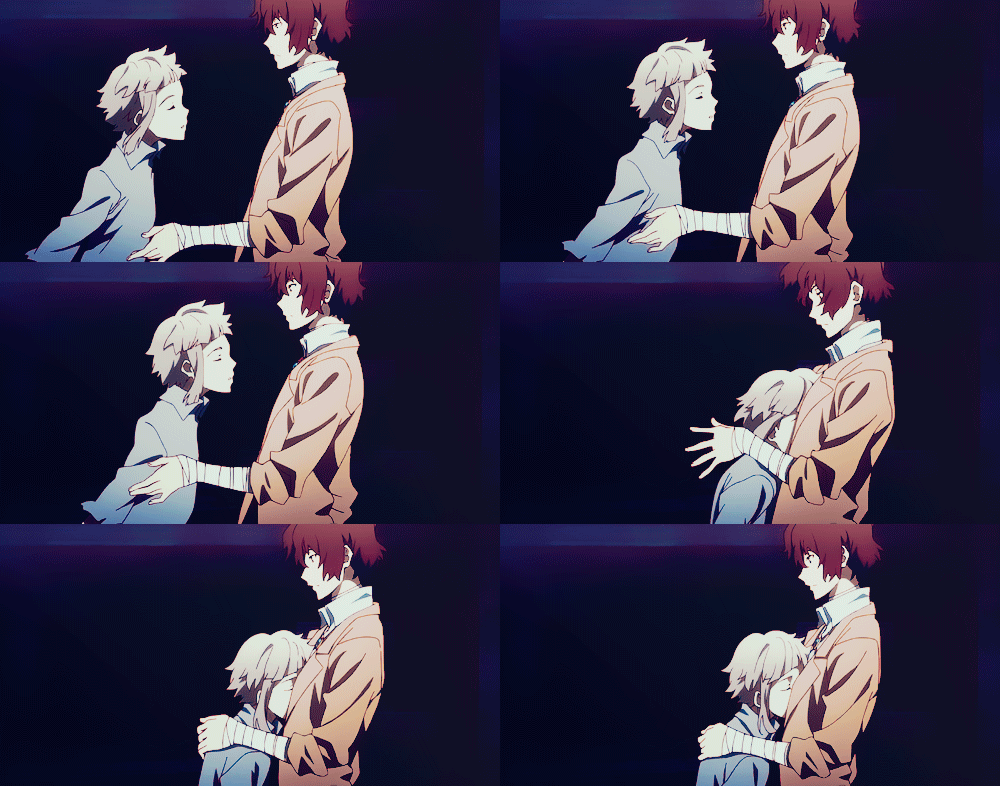
            You know, I didn’t think I’d find something this season that I’d like more than My Hero Academia. That was the show I was most excited for, and it delivered all I could’ve wanted. And while there are other shows this season that look great, like Joker Game (which I’m saving to marathon), Sakamoto (again, marathon), and Jojo Part 4 (marathon), I still didn’t think anything would top it (well, maybe Jojo, but you get the idea).
            Then Bungo Stray Dogs decided to surprise the heck out of me.
            I’m going to say upfront that this show could go either way for me. It could be another amazing experience like Kekkai Sensen (a show that’s very similar to this one), or it could fall off an amazingly steep cliff because it forgets to have a point/keep up the intrigue. I’d also like to point out how there may be some complaints about accuracy– most of the characters are based off of Japanese literary figures, and I’ve heard that Bungo does not portray them accurately – but it personally didn’t bother me that much. Despite all that, as of right now, Bungo Stray Dogs is my favorite anime this season, and its first episode was the most enjoyable episode of anime I’ve seen in a very, very long time.
To give you an idea, it made me laugh harder than Mayoiga, the characters are all interesting and solidly characterized, and the story leaves a lot open for the animators and writers to explore different supernatural ideas through words and visuals (which is something I’m always up for). On top of that, the opening and ending songs are amazing, the animation is fantastic, the music is perfect (thank you based Taku Iwasaki), and the voice acting was top-notch. I can’t say that it’s very deep or thought provoking (yet), but this is a show that could prove itself later down the line with its combination of strange humor, potential for creativity, and solid foundation.
Rating: Will watch until the end

Well, that’s all from me. Are there any spring shows that I am sorely missing out on? What’s your favorite spring show so far? Leave you reply in the comments and I’ll see you guys next time!
reade more... Résuméabuiyad

QuickThoughts: Stop Overhyping Anime!

Video Version:
Well, ERASED, or Boku Dake ga Inai Machi, or whatever the heck you want to call it, has just ended and I bet I’m going to get some requests to review it. I hate beating a dead horse, so if you know the words "overrated", "overhated", and "overhyped,” you've got the right idea. Of course, there’s more to that, but I’m not going to deal with that now. Instead, while this post certainly concerns the show, it's more a general message towards the community surrounding it, specifically all the people who hyped ERASED to the extreme.
I don't think hype is necessarily a bad thing, but recently, it's just gotten out of hand. I mean, rating One Punch Man as the greatest show on IMDB, which is above Breaking Bad, Rick and Morty, and Game of Thrones, before it's even finished? Its rating did fall after a couple weeks, granted, but still, don't you think that's presumptuous and rash?
The same exact thing happened with ERASED, where there was so much praise for it that it got into the top 5 anime on many sites by the 4TH EPISODE. This is almost as bad as completely dismissing an anime as an abomination after only 4 episodes (I mean, I shouldn't really be talking considering that I've dropped nearly 50 anime, but you get what I'm saying). Don't people realize that this type of omnipresent and overwhelming hype influences other people enormously? Yeah, you've got the people who can see through the hype and are able to not let it bother them, but most can't. You have to draw the line somewhere.
This especially pertains to currently airing anime, where everyone is basing their opinions off of smaller portions of anime, and speculating from there. Everyone should allowed to speculate, but it's just that: speculation. It implies uncertainty about the future, and letting yourself truly believe that a show will be good in the future isn't healthy. Eventually, it burns you out when you inevitably become disappointed. It's like expecting that you'll get into a really good college without preparing properly, but having way too much confidence that you'll get in. When you receive that rejection letter, it hurts. Badly.
However, being cynical without a speck of optimism is even worse, because then you just come off as a pretentious wannabe. The endless criticism of anime that get majorly popular is starting to tire me out. Popular doesn't always mean good, nor does it automatically mean bad. So, why do negative connotations always seem to follow the popular shows? Oh yeah, it's because clickbait, wanting to give off the impression that you’re smart and a hipster, and VIEWS. I’m no saint when it comes to this, since my first video was essentially clickbait, but I’ve (hopefully) improved since then. When you use triggering titles, like “The Force Awakens Stinks and Here’s Why” or “ERASED Was Never That Good,” it just seems shameless. At least let me be surprised by your content, or not allow me to preemptively judge it before I even click on it.
Criticism isn't and shouldn’t be about being completely negative, nor is it about being completely positive. I'm not saying that you should always take a neutral standpoint when reviewing or talking about a show (because that would be boring), but there needs to be balance. If anything, I have more respect for people who genuinely know what makes a piece of entertainment work. From this knowledge, henceforth, they also have an idea of what makes entertainment fail. I’ve heard many people talk about problems an anime may contain, but the real meat of criticism is describing what makes a show resonate with you, either positively or negatively. If you're able to show that you aren't too biased towards one side, and acknowledge that other perspectives exist, then you're on the right track, because you will become more approachable and not get as many insane comments.
There's a reason why you watch the shows you watch, whether it be for genuine enjoyment, intellectual curiosity, or to see how badly a show can screw up. There HAS to be some sort of positive feedback on your part, whether it be ironic or unironic, unless you truly believe that show to be completely unsalvageable and can prove it. Do not use buzzwords that make you sound pretentious, but actually prove your points by backing up your ideas up with examples and explaining your thoughts, instead of just stating them. The best way to get people to understand you is to show them your thought process, and then they can (hypothetically) reasonably respond.
I guess my point is, stop overhyping anime before they're complete, whether it be positively or negatively. Having such a black and white perspective of art defeats the entire point of art: its ability to be interpreted. So, the next time an airing anime comes around and interests you, feel whatever you want to feel about it, but always keep the opposite view in mind as a possibility. After all, you never know when an anime could surprise you.
reade more... Résuméabuiyad