Pages

.

Book Review: We Were Liars by E. Lockhart

Hey, I’m back with a book review! Haven’t done one of these in a while. Hope you enjoy!
Realistic fiction and I have had a pretty solid relationship, so I find it kind of shocking that I spend most of my time reading fantasy or science fiction. For one, most of the really good books I read are realistic fiction, like Looking For Alaska, Hoot, A Fleeting State of Mind, or The Sisterhood of the Travelling Pants. I guess my main problem with the genre is that the premises are normally too mundane and there’s always a very heavy risk of boredom. Yeah, there’s always a risk of boredom with any book you may pick up, but unless a book in the realistic fiction genre is somehow able to captivate me with interesting characters or themes, then it’s basically dead upon arrival. Though, on the other hand, at least it’s more tolerable than a boring book about zombies, gunfights, and killer robots, since you didn’t expect something awesome, right? Ah, it always boils down to expectations, doesn’t it? And when someone hypes a realistic fiction book up as the best book of 2014, then don’t your expectations get warped enough that you’ll willingly check it out? That book is the topic of today’s review: We Were Liars. Does this book manage to provide an unforgettable experience like every great realistic fiction novel should, or does it trip over its own feet and not deserve the title of “Best Young Adult Novel of 2014?” Sit back, relax, and read on as I review We Were Liars by E. Lockhart.
The Setup:
Cadence Sinclair Eastman is 18 years old, and is the heir to the head of the prestigious Sinclair Family, a prominent and wealthy lineage in the United States. However, she suffers amnesia due to an accident two years ago at her summer home, and now her main goal is to learn what actually happened to her. The details of her accident are sketchy at best, and her family refuses to tell her anything. So, over the summer, she goes to her summer home to see her extended family, in an attempt to discover what actually happened two years ago. From there, a tale of love, tragedy, mystery, and corruption unfolds.
The Characters:
What’s interesting about the main character, and most of the other characters for that matter, is how she feels both alien and human at the same time. It’s strange; on one hand, she’s relatable and complex, but on the other hand, I felt so distant from her problems and conflicts. However, this isn’t a bad aspect at all; let me explain. Cadence’s goal to discover what happened to her is understandable, but the way she talks about it and goes about solving the issue is roundabout at best. In fact, she doesn’t seem incredibly concerned by it most of the time, which confused me. Was she just used to not getting any answers? Is she just indifferent now? Is she normally this lackadaisical? Why isn’t there a sense of urgency? I guess you could say that her lack of motivation is due to her brain trauma, but at the same time, I guess no one in her family was eager to tell her what happened, so maybe it’s just her environment affecting her. Whenever she does ask, she gets vague and unspecific answers, since the doctors told her family that her memories will come back to her naturally. It’s a display of how environment can change psychology and thoughts, maybe, which plays into the themes of the novel nicely. So, what did that long paragraph of me rambling over questions and trying to come to a conclusion have to do with anything? Well, that’s what this book does incredibly well: making you think. All of the decisions that the characters make affect another character either physically, mentally, or both, making these characters feel less like hardened sculptures but more like wet clay that just keeps on getting rebuilt and rebuilt, using different colors and styles taken from others. Each character tries to remodel another character by ordering them to do something, or suggesting different ideas that could change their lives. All this culminates into everyone trying to accommodate each other’s needs, leading to stress and anguish, eventually resulting in a tragic conclusion that everyone is trying to recover from. What alienates these characters, however, is how robotic some of these decisions seem in order to accomplish what that character wants, which is what leads to the tragedy in the first place. For example, Cadence’s mother wants to keep her nice house, so she forces Cadence to kiss up to her grandfather over things Cadence doesn’t care for in the slightest. It makes you think: what good mother would force her daughter to lie to gain a materialistic end? It’s all these that stresses out Cadence and her cousins Mirren, Johnny, and her friend Gat, leading to what can only be described as a disaster. This novel’s character development is also great, though not in the traditional way. The side characters do their jobs, but outside of the mains and their mothers, no one really stands out.
The Story:
Of course, this novel depicts how Cadence discovers how corrupt and defunct her family truly is, but it’s not without its fair share of side stories and filler. I did not like how the story meandered into random side plots that felt really unnecessary in the long run. Then there’s the pacing, which is rather inconsistent. There were some parts where I wanted to throw my book against the wall because the story was moving too slowly, and other times I had trouble processing what was happening. Though, the latter only happened once, and that was near the end. In the beginning, the book appeared to literally have no direction or plot, which makes for a bad first impression. As the story went on, however, I started to get more invested, because if there’s anything the book’s good at, it’s the mystery aspect. I honestly had no idea where the story would take me, and all my predictions were completely incorrect. The themes about greed and racism are also done pretty well, which I didn’t expect. Overall, while the story does have its problems, I did enjoy reading the book, and the ending is exceptional.
The Writing Style/Grammatical Errors:
The imagery in this book is stunning and is also very shocking. This book seems to like using blood metaphors, which caught me off guard on more than one occasion. For example, something would happen, and then Cadence would describe some sort of major injury, which made me think, “Why aren’t you DOING something to help yourself?! Does no one around you notice that you’re bleeding to death!?” As it turns out, it just represents pain. The book also sometimes uses a structure similar to what you would see in poetry, which was slightly unneeded, but it still fit somewhat. There were no grammatical errors to be found.
Final Judgment:
Overall, We Were Liars is a pretty good read. However, I do think that your enjoyment of it depends on whether you like the ending or not. For me, I loved the ending, and thought that the buildup and characters were great. But, I can see why others would dismiss this book for that very same reason. I give We Were Liars a 3.75 out of 5, and a recommendation to check it out. But, like always, it’s up to you to decide your own opinions.
ScoreCard:

reade more... Résuméabuiyad

Fangirl February: Shiki Ryougi Character Review


Video Version:
Introduction:
One of the sadder parts of watching anime is how, even though they are typically more common than male characters, it is very hard to find an interesting and unique female character. In most shows, they tend to fall under the typical archetypes of the tsundere, the yandere, the kuudere, the dandere, and so on, and while characters within these archetypes aren’t necessarily bad or unentertaining, they’re still stereotypical characters. Sure, you’ve got standout shows with awesome female characters like in Kill la Kill or Yona of the Dawn, but even so, most females are whiny, annoying, and uninteresting. So, when I do come across an anime that seemingly sports remarkable and unique female characters, I will automatically be interested in the show, even if it turns out terribly. That’s where Kara no Kyoukai, or Garden of Sinners in English, comes in. Probably my favorite movie series of all time, it has many interesting and tragic characters to analyze and talk about, but for my favorite female character in anime, I’ve chosen Shiki Ryougi, the main female lead. What makes her so special that she stands out among the crowd? Well, sit back, relax, and read on as I explain why in the third installment of Fangirl February. Keep in mind that I am basically going to spoil the entire series in this video, so if you haven’t seen Kara no Kyoukai yet, please do so before watching this. If you’ve seen it or haven't and just don’t care, let’s get started.
General Character Overview:
As stated earlier, Shiki Ryougi is the main female lead of the Kara no Kyoukai franchise, a series of seven movies animated by Unlimited Budget Works coughI mean ufotable. The series is based off of light novels written by the same guy behind the Fate visual novels; in other words, it is Type-Moon property. And, at least in my opinion, Kara no Kyoukai is leagues ahead of Fate/Stay Night in nearly every way. Fate/Zero is another story, but that's another topic for another time. Kara no Kyoukai is not limited to the typical visual novel structure, and it shows through its narrative and experimentation with theme. Many ideas are displayed and discussed in the movies that are thought provoking, but a downside is that the movies have questionable dialogue and too much they wanted to discuss, which is its main problem. The movies focus too much on ideas and concepts that are out of its reach, causing many people to call the series “pretentious”. And, I would be inclined to agree, if not for the seventh movie. By now, you’re probably thinking, “What the heck does this have to do with Shiki Ryougi?” To answer your question, it has everything to do with Shiki Ryougi. For the first six movies, Shiki is a mystery, and nothing about her really makes any sense. At times, it felt like her characterization was lost due to the endless discussion of inane topics and no display of her own interests or desires. In the second movie, which is her first chronological appearance, she’s shown to have two personalities: Shiki, who is distant, cold, and emotionless, and SHIKI, who is fun loving but has an incurable bloodlust. At the end of the second movie, SHIKI tries to kill Mikiya (the main character of the movies), but is hit by a car. In the fourth movie, which comes next chronologically, it is implied that SHIKI has been killed due to the car accident, leaving the first personality alone. The third movie shows that, however, the remaining Shiki is still violent and bloodthirsty, which, at least, lead me to believe that SHIKI definitely left a negative impression on the current Shiki. In the fifth movie, we learn that there are mages who specialize in bringing out the darkness in humans, and it is shown that Shiki was involved in this somehow, as the mages are trying to bring out the evil side of Shiki once again. Something to take note of is that, in all of the movies, the opponents were originally normal human beings who went on violent rampages once they encountered a mage. Then, the seventh movie happens. We learn that Shiki was involved with the mages, and that Shiki’s bloodlust has been partially cured by Mikiya. In order to keep Shiki violent, the mage Arya uses the obsessive Lio to bring Shiki back. This leads us to the most important part of the movie: watching Shiki become more human because of Mikiya’s influence. When Shiki and Mikiya are talking over the phone, they are arguing over whether Shiki should kill Lio, with Mikiya stating that he won’t forgive her if she does. This ties into both of their progressions as characters: Shiki becoming less of a monster, and Mikiya learning the harsh reality of our world. Later on, Lio nearly kills Mikiya, and Shiki, thinking Mikiya is dead, kills Lio. However, when the two finally reunite, Mikiya says, “I forgive you.” In other words, Mikiya accepts that not everything can be solved peacefully. The entire message of the movie is to learn how to compromise, because there are no issues that are completely good or evil. All of the characters Shiki defeated earlier had some sort of emotional baggage or were innocent victims, but because of their destructive nature, they needed to be stopped. Shiki is different, however, because of her attachment to Mikiya; he is what makes her human.

Why She’s Featured in Fangirl February:
Shiki Ryougi is a very special character to me, and not because I can relate to her on a personal level. Yeah, it’s kind of hard to sympathize with someone who is essentially a psychopath, and admittedly she isn’t the most complex female character I’ve ever come across. But, much like with the movie series she comes from, I don’t really mind. I love how Shiki is different, interesting, and so unlike any other character in composure and conflict. She has to fight so many people that are trying to turn her into a monster, and uses her own methods to do so. Even when Mikiya doesn’t agree with her, she still goes off and does what she thinks is right, even if her view falls into a moral grey area. Sure, technically she’s killing hapless victims, but each person was so ravaged, broken, and depressed that maybe they were better off. It’s kind of like the morally grey ending of Million Dollar Baby, or the actions of Don Vito in The Godfather, or the entirety of Mystic River. This is how themes are presented to the audience: through character personalities and their interactions with others. I’m not saying that I necessarily agree with this ideas, by the way; I’m just trying to say what I believe the movies are trying to convey through its characters. I’ve gone on and on throughout my career as a reviewer about the definition of pretentious, calling Psycho-Pass pretentious, Code-Breaker pretentious, Sword Art Online 2 pretentious, and so on, but pretentious is something Kara no Kyoukai is not, for the most part. The ideas it tries to convey are all tied in somehow, with Shiki being the perfect example of this. Her development reflects these ideas of morality, with Mikiya’s character being the juxtaposition, with his naïve mentality. On top of that, she’s also pretty awesome. Like I said in my introduction, it’s really refreshing to see a strong and female character like Shiki, since most are pretty archetypal and weak, unfortunately. So, that’s why I like her so much: she’s unique, conveys interesting ideas throughout the series, and is very fun to watch.

So, I hope you enjoyed the third installment of Fangirl February! I’ll see you all next time for the final installment: the Fullmetal Alchemist 2003 review. Until then!
reade more... Résuméabuiyad

Fangirl February: Hachiman Hikigaya Character Review

Video Version:
Introduction:
Characters and their interactions are normally what makes a show for me. Great characters can make a mediocre show with an average story good, but lackluster characters can make a show with a decent plot fall flat on its face This is something that comes into play with slice-of-life, romance, or drama shows especially, since they’re entirely character based. One of these particular anime is My Teen Romantic Comedy SNAFU, my favorite high school drama anime, and the main reason I love it so much is due to Hachiman Hikigaya, its protagonist. In fact, my liking for Hachiman has gotten to the point where he’s become my favorite male character in anime, and we’re here to analyze why. Sit back, relax, and read on as I talk about one of my most beloved characters, Hachiman Hikigaya.
General Character Overview:
Hachiman Hikigaya is, at first glance, not incredibly inspired. But, once you dig deeper into his characterization and actions, then you begin to uncover something truly special in his own weird way. Hachiman Hikigaya is a loner, and generally doesn’t interact with others due to every bad experience he’s had when he tries to become friends with others. The anime shows us how these instances affect him, and why he’s become pessimistic and anti-social. He was always kind of weird and outlandish, and had these expectations that, someday, he’ll have friends and a nice social life. However, as time goes on, Hachiman begins to lose trust in those around him as they keep on excluding and excluding him, to the point where he decides that he’s content with being a loner, purposefully excluding himself so he won’t be hurt by others. This was not helped by how he showed up late to high school. On the first day, as Hachiman was riding his bike to school, he ends up saving a dog’s life and gets injured in the process, staying in the hospital for a while. By the time he even attends high school, everyone’s already friends with everyone else, and this is the moment where he accepts how his life has turned out. This somewhat changes, however, when he’s forced to join the Service Club, where he meets Yukino Yukinoshita and Yui Yuigahama. From there, he uses his blunt and pessimistic mindset to help others with their social problems, even if it doesn’t always turn out for the best. Hachiman’s ability to observe his classmate’s behavior and decipher exactly what is wrong with a relationship is the best part of the entire show, mainly because he’s normally correct. He’s able to recognize faults, but when someone asks him for help, his response is normally hard for them to listen to because he never sugar coats anything. For example, my favorite scene in the entire show is in episode 12. There’s this girl who’s running the school festival, but completely slacks off and makes Yukino, the vice president of the committee, do all the work. However, when she’s supposed to speak in front of an audience, she has no idea what she’s doing or even what she’s supposed to say. Everyone around her tries to comfort her, but Hachiman realizes that she’s not upset over how she didn’t do her job, but because Yukino apparently stole the spotlight from her. So, he tells it to her without beating around the bush, using reverse psychology and forcing her to accept how she really didn’t do anything. Of course, all this does is anger everyone else, even though it’s the cold, hard, truth. This brutal honesty is what separates Hachiman from typical high school protagonists; it’s because he’s not afraid to speak his mind and doesn’t care who gets hurt in the process. But what keeps him from being completely unlikable are the small hints of how he wants to be social, and how his observations are normally spot on. Think about it: why would Hachiman even say anything to help these people if he didn’t care about them whatsoever? If he were really anti-social, he would just be quiet and not say anything. There’s obviously still some part of him that wishes that youth wasn’t a hoax, or that hypocrites didn’t exist, or that nice girls aren’t nice to him simply because they’re nice to everyone else, but at the same time he accepts reality and doesn’t believe it can change anytime soon. And, in my opinion, he’s probably the best character to come out of a high school anime. He is what makes SNAFU what it is, and the show would have failed dramatically had he been a generic main character.
Why He’s Featured in Fangirl February:
So after that long analysis, what is it about Hachiman that I like so much that I would call him my husbando? Clearly, he’s not typical husbando material, and the fact that he’s anti-social and blunt probably won’t go over too well with others. Well, personally, it’s because I can relate to his problems and how he tries to fix them. I understood his interior monologues about how hypocritical the world can be, and how most people put on a façade just for the sake of fitting in. I also respect how honest he is, even if it gets to brutal degrees at times, and how he just doesn’t care about what other people think of him. You know how earlier I was talking about episode 12 of this anime? Well, here’s something else to add to Fangirl February: it’s my favorite episode of anime of all time, solely because of that scene. The laconic delivery, perfect word choice, and the emotional response of everyone, including me, was enough for me to decide that Hachiman Hikigaya is my favorite character of all time, period. I can understand why people don’t like him; his pessimism probably won’t mesh well with people who are relatively happy and optimistic, or to others he may just seem like an ordinary, lonely protagonist. But, to me, personally, I was able to connect with him as a character on a level I never thought possible, and it’s hard for me to ignore my biased opinion towards him. He may not be a perfect character, but he’s my favorite, and for me, favorite is tantamount to best.
Conclusion: 
So, I hope you enjoyed this second installment in Fangirl February! I’ll see you all for my next post, where I talk about Shiki Ryougi, my favorite female character! Until then!
reade more... Résuméabuiyad

Update 2-7-15: Movies of the Month


For a media review blog that covers books, anime, and movies, I haven't really dedicated any time to reviewing movies I watch. So, to fix this problem, I've decided to make a monthly post dedicated to the movies I saw that month, recently or otherwise. I'll make my first post soon, covering a few movies that I saw in January and February. These will be short, quick-to-the-point, and without a scorecard. Until then! 
reade more... Résuméabuiyad

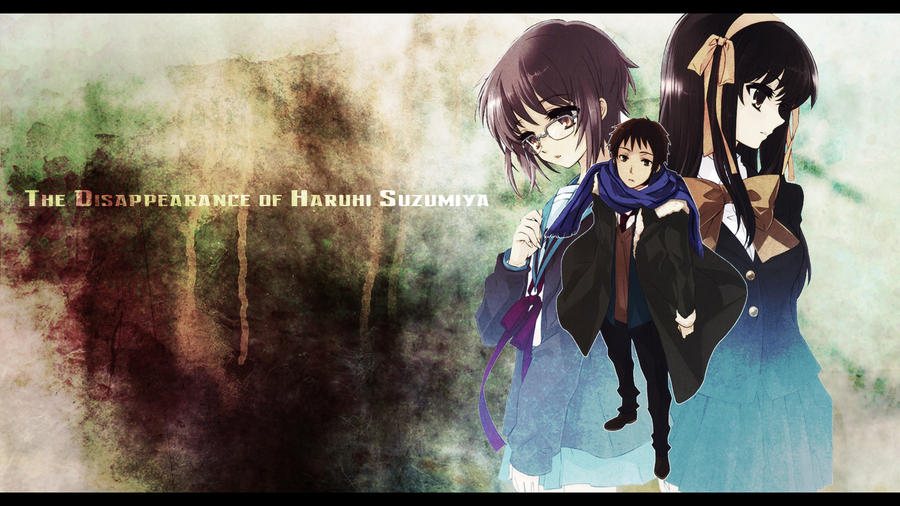
Fangirl February: The Disappearance of Haruhi Suzumiya Review


Video Version: 
Every anime fan that has watched at least a couple shows has heard the name Haurhi Suzumiya. The show has set a standard in the community that shows just what anime can do with its weird situations and characters, sort of the “stereotypical anime” if you will. However, for all its strange stories and creative ideas, my main problem with the show was that it didn’t take itself incredibly seriously and really utilize these ideas to their fullest potential. This didn’t make the show bad by any means, though. Heck, ever since I decided to watch it again it’s been on my favorites list, and this problem is most likely due to my personal tastes. I’m normally not the biggest fan of episodic shows because the formula almost always remains the same, and this repetition makes the show predictable and boring after a couple episodes. The Melancholy of Haurhi Suzumiya follows this structure, but it worked somehow, since it managed to spice up the mysteries and situations the characters were thrown into each episode or two. The movie, on the other hand, is an entirely different matter, and it has changed my opinion of the franchise entirely. The Disappearance of Haruhi Suzumiya is currently my favorite anime movie of all time, but why is that? How did the movie rise above and beyond my expectations to accomplish this? Sit back, relax, and read on as I review the first topic of Fangirl February: The Disappearance of Haruhi Suzumiya. Be warned that some plot points from the original show will be spoiled, but nothing too major in the movie will be given away. With that out of the way, let’s get started.

Story:
Something that made the original series entertaining was the show’s ability to make ordinary activities feel large and heavy, using the plot device known as Haurhi Suzumiya. You see, Haruhi is somewhat of a god, at least according to Koizumi, and is able to control time and space. Don’t question it, you’ll just confuse yourself. Because of this, if Haruhi becomes bored, then the world ends, and the show utilizes this to make its events all the more exciting, but at the same time doesn’t overplay it. Now, imagine if the show removed that plot device, but still managed to keep its large scale without feeling forced. That is this movie in a nutshell. As the title suggests, Haruhi has disappeared, and on top of that, the world around our normally satirical main character Kyon is completely altered. His classmates are sick, Class 9 doesn’t exist anymore, all of his supernatural friends are now normal human beings, and Ryoko Asukura is sitting behind him when she should’ve been erased from existence. A bewildered and terrified Kyon basically spends the entire movie trying to discover who changed the world, and somehow change everything back to the way it was. While this plot does sound rather simple, the movie throws enough twists and turns into its story to keep you guessing and remain invested, and focuses more on the “how” and “why” rather than just trying to get Haruhi back. And, in my opinion, this relatively unassuming plot is one of the best I’ve ever seen. Every plot twist makes sense, every direction the show takes feels natural and fits into the story, and the pacing is near flawless. While some may think the pacing of the first half is too slow, I was never bothered by it, as it built atmosphere and showed how Kyon reacted to this new world, which is vital to understanding his motivation. Not to mention just how perfectly past events in the story tie into this movie. The movie explains to the audience what important events happened previously, and gives enough details so even people who haven’t seen the show can understand what’s happening. The reason all these events tie in together into this singular movie is to draw emphasis to the main conflict of the movie: whether Kyon wants to live a normal life in this new world or not, making this movie the perfect conclusion to the franchise. Now, I would discuss Kyon’s choice at the end, but that would take up too much time and would basically spoil the entire movie. My recommendation is, watch the movie, and come up with your own interpretations as to why Kyon made his decision, and what messages the author tried to convey through this choice. For me, I thought the author was trying to show how the world can’t be altered just to fit the needs of a singular person, because then you’d have to change the lives of everyone around you. To quote the Light Novel, “We all find ourselves wishing for a complete redo at some point in our lives, and all of us have dreamed about changing reality to suit our individual means. However, that would normally be impossible. And probably not a good idea.” (Tanigawa 154). In other words, life isn’t really fair, and no matter how much you want to change it, that’s how it is, and you have to learn to deal with it and move on. Not everything will go your way, but you should also find ways to enjoy what it is that you’re given, and know that people will be there to help as long as you say something. And, considering how crazy and strange the situations were in the TV series, you could say that this was the perfect message to end this franchise with. Oh, at least until The Disappearance of Nagato Yuki-chan comes out, but that’s a spin-off, so I’ll let it go. Is anyone else excited for it besides me? Because I sure am!
The story follows Kyon as he tries to figure out what happened to his old world
Characters:
Something that took me by surprise in this movie was how…different these characters felt from the original. Sure, their general personalities remained intact, but they felt a lot more human than the original series. Oh, in the TV show, they were fun to watch, but it wasn’t until I watched the movie that I managed to emotionally connect with any of them. Let’s start off with Kyon, the main character of the movie. Up until this point, he was mainly an observer of the crazy happenings going on around him and complained about not having a normal life. But now that he’s been thrown into an unknown situation where he’s the only person who can fix the world, and his supernatural friends are completely unaware of what’s happening, well…he panics. The first half of the movie shows how Kyon breaks down in desperation and fear, abandoning his sarcastic persona entirely. Then, as he solves the mystery, he begins to question whether he even wants to go back to his old reality, where all he did was complain and be thrown into chaos every day. This movie details his development from a spectator to someone who learns that he has to actively take part in these occurrences if he wants to remain safe and comfortable. He learns to take the initiative, and appreciate all the fun he’s secretly been having behind his complaints, which makes him a relatable character. You understand why he breaks down because he doesn’t know what to do, and as he scrambles for answers to his perplexing problems, you see that he’s not just some character who takes everything in strides, but a human who has no idea what to do in a time of crisis because he relied too much on his friends. This reliance also comes into play with the character of Yuki Nagato. In the show, Yuki was an expressionless alien who basically solved most of the SOS Brigade’s problems with her outstanding abilities, and while I don’t want to spoil the twist in the movie, well…let’s just say that can get tiring. However, I do want to clarify a misconception about her character. There’s a difference between character development and characterization. Character development is the author’s way of showing how a character changes, while characterization is the author’s way of displaying who a character is. Most people say that Yuki’s development in this movie was fantastic, and I don’t agree because she doesn’t really change over the course of this movie. Yes, she does subtly change in the series, but what this movie did was expand upon her character, using characterization to allow the audience to learn more about her and her problems. And, in that regard, the movie does a great job. The other SOS Brigade members don’t really get enough screen time to be considered part of the main cast, but I did like some of the ways these characters tied into their real-world counterparts. For example, in Endless Eight, Koizumi states that Kyon should whisper into Haruhi’s ear that he loves her, and while Kyon objects, Koizumi suggests that he himself do it. This seems insignificant, but then when you watch the movie, Koizumi in the new world is in love with the Haruhi of the new world. And, in the beginning of the TV series, Asahina states that she’s part of the calligraphy club, and that’s where she’s found later in the movie. It’s little touches like these that makes these character’s appearances worthwhile, and adds some more to their overall characters.
Yuki Nagato and Kyon
Presentation:
Kyoto Animation has made a name for itself by producing high quality shows in terms of aesthetics, so believe me when I say that this movie is probably the best in their entire lineup when it comes to animation. The lighting in this movie is breathtaking, creating a realistic atmosphere that focuses on the bleakness of winter with greys, tinted blues, and browns. This acts as a contrast to the original show, which was mainly bright and colorful. The backgrounds look gorgeous, with immense detail put into each frame. The movements are fluid for the most part, and the character designs are really good. I’d also like to mention the cinematography, as it really made some scenes stand out above the rest. As for music, I love this soundtrack. The songs are mainly renditions of classical music, with a few original songs thrown in. The soundtrack has a way of being relatively simple in composition, but is incredibly effective in setting the atmosphere and tone. My favorite track is Gyumnopedies Dai 1 Ban, and a link to the song will be featured in the description for you to check out. Finally, should you watch this in English or Japanese? My choice is, English, for two reasons. Firstly, there’s Crispin Freeman as Kyon. I’ve always liked his performance in the original series, but in this movie Freeman portrays Kyon perfectly in a time when his character is scared, desperate, and confused, and it’s hard for me to picture anyone else playing him. Secondly, Michelle Ruff as Yuki Nagato. Yuki’s character was very robotic and emotionless in the original, but Ruff’s ability to change her character into the shy and bashful version of Yuki was near flawless in this movie. Good job, English cast, good job.

Gyumnopedies Dai 1 Ban:

 
The presentation is plain fantastic
Why It’s Featured in Fangirl February:
So, why is The Disappearance of Haurhi Suzumiya my favorite anime movie of all time? Well, it’s a fantastic mystery, is able to be emotional, exciting, and intriguing, and finally, is human. Mystery is one of my favorite genres in all of entertainment. I’ve always enjoyed watching characters trying to solve capers, picking up clues and eventually coming to a conclusion, discovering who did what and how everything came to be. Unfortunately, finding a good mystery anime is rare. Most mystery shows aren’t about an overarching case, but more about episodic cases, like in the ever so famous Melancholy of Haurhi Suzumiya. Then, there’s the Disappearance of Haruhi Suzumiya, the movie that fulfilled my desire for a good mystery more than I ever thought this franchise could, and cemented itself as my favorite anime movie of all time. In all honesty, this relatively simple story is my favorite mystery in all of entertainment. Everything is just so beautifully executed, from the characters to the plot twists to the amazing presentation, and even some underlying themes that I didn’t pick up on during my first viewing concerning escapism and accepting reality. The characters, at least Yuki and Kyon, feel more realistic and sympathetic than they ever were before, and I can’t imagine the movie being written or presented any better. To make a long story short, this movie is what I wanted Haruhi Suzumiya to be, with a much more human touch combined with a wonderful story and a perfect presentation. There’s nothing else to it. 

Conclusion:
Overall, while the movie does have its flaws, like how the ending doesn’t really make sense when you think about it, I still love this movie unconditionally. It’s hard to find a mystery this well done, and, at least in my opinion, this is the best of the best. Now, let’s move onto the scorecard, where I will rate this movie based on its story, characters, presentation, and personal enjoyment. I give the story a 9.5 out of 10, for being slightly slow but very atmospheric with one of the best climaxes in any anime period. I give the characters a 9 out of 10. While Kyon and Yuki had significant screen time for characterization and development, and it was interesting to see the characters in this other world, it did feel like the characters except Yuki and Kyon were there for the sake of being there, as they didn’t really do anything. The presentation gets a 9.5 out of 10, because the animation is near flawless, the music is wonderful, and the English version is top notch. And, for personal enjoyment, I give this movie a straight 10 out of 10, because I can do what I want, and I love everything about this movie. As for the final score, I give The Disappearance of Haruhi Suzumiya a 9.5 out of 10, and a recommendation to watch it when you can.
ScoreCard: 
Alternate Anime Recommendations:
Patema Inverted
Hyouka
Well, that’s all from me. I hope you enjoyed this first post in Fangirl February! Join me next time for my character review of Hachiman Hikigaya! See you then!

reade more... Résuméabuiyad