Pages

.

Long Thoughts: Death Parade


Video Version: 
Warning: There will be spoilers in this post, because I personally believe that it is impossible to critique this show without diving into specifics. You have been warned. For those of you who’ve seen Death Parade or don’t care, let’s get started.
Hey, thanks for waiting for new content outside of Fangirl February or Seasonal Content! I’m sure you’re all excited, so let’s begin. 
Every once in a while you come across an anime that starts off fantastic, but slowly falls off the cliff of anime greatness. That show may have fantastic ideas, be very enjoyable to watch, have interesting characters, a phenomenal presentation, and an abundance of potential. But, eventually, something goes wrong, and you can't help but question what went astray. Maybe the ideas weren't executed properly, or the characters were not as well written as you once imagined. After I watched the topic of today's review, I couldn't stop thinking about those kind of things. So, in order to organize my thoughts, I decided to write a review, which eventually turned into an analysis. That anime is a show that aired in the Winter 2015 season: Death Parade. Let the review commence.
Background:
Death Parade has an interesting backstory, to say the least. It all began in 2013 with a short movie called Death Billiards. Now, I watched Death Billiards having little to no idea of what to expect, and came out absolutely loving the movie. The psychological elements, the characters that felt human despite how unfavorable their personalities were, and the intensity of the movie completely blew me away, and I had the movie on my favorites for quite some time. So, when it was announced that an anime series based on the short called Death Parade was coming out, I flipped. I was excited beyond belief, wishing that the show would deliver the same experience as the short, while also being able to separate itself in some way. Well, I got what I wished for, but the end result wasn’t very satisfactory, at least for me. However, for the sake of fairness, let’s start off with the good aspects of the show.
Death Parade originated from Death Billiards, a wonderful animated short movie.
The Good:
Something that Death Parade absolutely nails is style and atmosphere. The coloring and lighting in this show is perfect, with every frame being filled with some sort of movement or action, whether it be background or character animation. The main color Death Parade likes to sport is purple, which I’ve noticed is a trend with Madhouse productions. Like, No Game No Life’s main color was red, Parasyte’s was beige, and Paprika’s was deep red. Interesting. Anyway, the character designs are all very well done, with each character feeling distinct and defined. I especially like the arbiter’s eyes; they were always interesting to look at, and these features distinguished them from the human characters. The soundtrack is also pretty nice, though forgettable for the most part, except for the opening and the ending. I would try singing the opening, but, well, I can’t pronounce Japanese for my life.


            Another thing Death Parade does well is some of its individual episodes. Like in Death Billiards, the character dynamics and backstories are the best parts of this anime. My favorite episodes were 3, for its sweet tone and incredibly sympathetic characters, episode 4, for its tragic characters, and episodes 8 and 9, for actually being better than Death Billiards in execution and emotional investment. These characters and their interactions can really make you think about the human condition, and how far people will go to protect the ones they love. The concept also has a way of getting in your head, asking you what you’d do in the situation presented. Would you go the selfless route, allowing the other person to be reincarnated, or would you fight for yourself? Are you truly as selfless as you thought? Would you go to the void on behalf of the other person? It’s an infectious idea that can really make you think and question yourself, which is an ingenious feat on the writer’s behalf. I’ve heard some people complain that these characters’ development is forced, but I always thought that they were supposed to feel that way. These characters are forced to participate in a game that unleashes their inner darkness, so if it feels forced, then the show's doing something correctly. The entire scenario is unnatural, which drives home the show’s main idea that people should not be judged in this fashion, so I think the show succeeds in this regard.
A screenshot from Episode 3, one of my personal favorite episodes of the anime
            Death Parade is also very enjoyable to watch. The way the show makes you think and consider what’s happening can be very gratifying. It makes the viewers feel intelligent for figuring out what’s happening, and I always respect a show that takes its audience seriously. Though, another thing that makes Death Parade enjoyable is how accessible it is. While the show does make you think, its concepts are usually easy to understand or are clearly explained, which allows for more people to enjoy it. It’s not like the insane Kyousougiga or esoteric Ergo Proxy where you really have to pay attention to understand what’s going on, which is good for both a mainstream audience and people looking for something a little deeper than their average shonen action show. I’m actually quite happy that Death Parade has become so popular, because it’s a step forward for the anime community as a whole. It shows that people want anime like this, and hopefully in the future, we will get better and better anime that don’t rely on clichés or fanservice. However, as much as I want to love this show, there are some problems that really hold the show back from being something brilliant. So, enough beating around the bush, let’s get on to what you’ve all been waiting for: me ripping the bad aspects to shreds. 
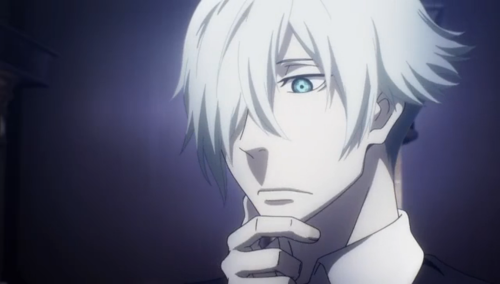
It's PONDERING TIME!
The Bad:
I think my main problem with Death Parade isn’t necessarily the ideas or concepts presented, but more on the execution of these ideas. As I stated earlier, the concepts are easy to understand, but the story makes absolutely no sense. The idea that the arbiters are emotionless robots who judge people without bias is a great one, but the way the show displays this is incredibly confusing. For example, you see Ginti and Nona express emotions whenever they’re on screen. Nona is sly, intelligent, and obviously feels like something is wrong with the system they’re a part of. Ginti, on the other hand, feels hatred for humans, and loves torturing them during judgments. However, the one Arbiter that apparently develops human emotions is Decim, who is ironically the most deadpan and emotionless character in the entire show. That makes no sense. Maybe instead of labeling the arbiters as emotionless, maybe the arbiters should have only expressed negative emotions, which impairs their judgment. This would make a bit more sense, since one of the plot points brought up at the end of the show is that arbiters are actually the people who came from the void. And this problem of misguided execution appears more than once in the show.
So, Decim gains emotions over the course of the show...but the other arbiters clearly express emotion, and Decim's personality is incredibly deadpan.
 Another example is in episode 2, when the setup for Death Parade is explained. You notice that Decim has a lapse in judgment, and sent the wrong person to the void after the judgment. This should have set up a theme relating to how we can’t judge people based on select memories and being put under pressure, but more on how they are as people. But, that doesn’t really happen. At the end of the show, people are still judged based on their performances in games, except Decim will treat it with more passion…? Where was this supposed to lead? And, okay, before anyone criticizes me, I get that the system isn’t supposed to make sense, because that leads to questioning the system, and that these backwards ideas are supposed to be reverse psychology. But the questioning doesn’t change much, and everything kind of goes back to the status quo.
A screenshot from episode 2, showing how Decim made an error in judgment. Logically, this should lead to the characters questioning the system.
Then there’s also the idea concerning the search for purpose in life. This is the biggest flaw in terms of narrative for Death Parade, because while the main message at the end is to live life with purpose, the show doesn’t provide a purpose worth living for amidst all the suffering the characters went through. The reason why many people believe in an afterlife is so they can live their lives with purpose, because if you're a good person, you'll get rewarded; but, in Death Parade, in which the setting is clearly in some sort of purgatory, they never bring up a good reward for the tragic lives of the characters. It’s like if you just finished taking the hardest test of your life, and you find out that your reward is either taking an infinite amount of tests or holing up in your basement and doing absolutely nothing. In other words, if you lived your life with purpose, why would you want to live another life just to find another purpose all over again? Why is reincarnation the reward for a life that was well lived? I'm not saying that it can't be, since different people have different goals in life, but Death Parade doesn't answer this question, which is a major issue. This is something that its prequel Death Billiards avoided by not giving specific names to the destinations of the characters. It was left up to interpretation where the people went. While interpreting this, I don’t think it’s much of a coincidence that most people came up with heaven or hell, not reincarnation and the void. Death Parade offers no reward for living through the hardships in life, which completely contradicts the message that you should live your life with purpose, since the show doesn’t give you a good purpose to live your life for! I'm not saying that people can't find their own raison d'êtres in life without the help of an afterlife, but again, Death Parade takes place in a purgatory, and most of the characters shown seemed to be kind-hearted but lived miserable lives. So, why can't they find solace in this afterlife, which is supposed to reward the good and punish the bad? Maybe I'm nitpicking, but I think that it’s a pretty big problem when an anime can’t back up its themes with evidence, which Death Parade does not do. 
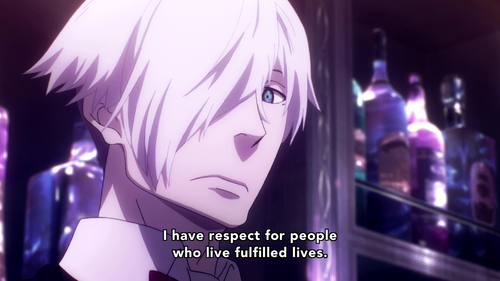
But for what purpose, may I ask?
You know what movie I kept thinking of while thinking about Death Parade, which actually does this concept much better? Defending Your Life. These two pieces of entertainment are very different in tone and character, since Defending Your Life is primarily a comedy, but they essentially have the same themes and story. Except, in Defending Your Life, when you die and after you’re judged, there are three options: either you’re reincarnated, sent to hell, or sent to a place of higher knowledge and enlightenment. This gets the theme of living your life with purpose across much better than Death Parade, because the judgments are fairer and if your life is deemed purposeless, you have to live again and again until you find purpose, and then get rewarded for it. Then there’s the other option of getting sent to hell, but that’s only if you’re a really bad person. And, on top of that, all the lawyers and employees in the purgatory the movie takes place in were people who went to the place of higher knowledge, which means that the judgments are done by well qualified people. That also makes much more sense than having the terrible people who were sent to the void in Death Parade make the judgments. And before you bring up the argument that Death Parade was supposed to be nihilistic and display how life really has no meaning, think about how Decim constantly says how he respects people who’ve lived a fulfilled life. Why else would a main character say that over and over again other than to get the point across that life should have purpose? Not very agnostic, now, is it?
A (badly rendered, sorry for the low quality) judgment scene from Defending Your Life
Next, there are the characters. Oh boy, the characters. Where do I even begin? Honestly, it felt like the show was writing up character motivations as they went along, leading to character arcs that lead nowhere or lead somewhere but not very clearly. Remember Ginti and the girl who’s obsessed with idols? What was their purpose, exactly? It didn’t feel like anything was accomplished with that story arc, which made those episodes feel pretty pointless. 
Behold, the most pointless character of the show!
And what about the conflict over Decim getting emotions? Decim was never punished for it, and Oculus didn’t do anything after he discovered what was happening. He was just like, “Oh, sure. Nothing to see here!” Aren’t the Arbiters supposed to remain emotionless, and if one gains emotions, it’s kind of a big deal? Why would he just shrug it off then? I don’t remember seeing an explanation for that. Then we get to Decim and Chiyuki. Chiyuki was actually fairly developed, with a sympathetic backstory and reasonable motivations, but her personality is as bland as a piece of cardboard. As for Decim, again, he’s not the worst character in the entire show, and he does have solid development, but the rest of the confusing plot elements holds him down. I will admit, seeing him cry at the end of the show did get to me, though. But, I think that’s yet another problem; focusing on the uninteresting characters over the interesting ones.
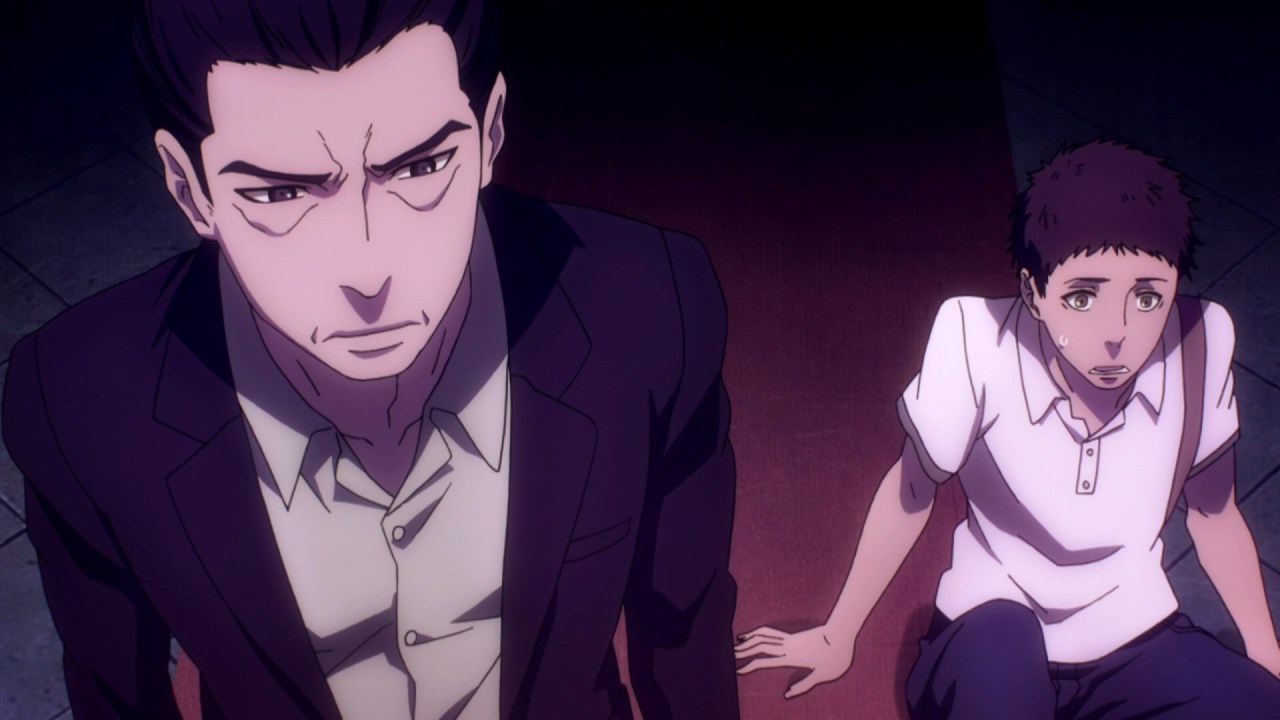
The human characters (like these two from episodes 9 and 10) were great because they displayed human emotions, but the arbiters were uninteresting for the most part.
In Death Billiards, Decim and Chiyuki were unimportant; they were observers to the events unfolding in front of them. The real meat of the short was the two human characters featured in the movie, as their physical and mental battle is the most intriguing aspect. This same aspect is what made most of the individual episodes great: the human element behind the contestants. When you take that away, you’re left with the bystanders that never played much of a role to begin with, and while the show did try to make them interesting, it went about this in the most nonsensical and confusing ways. And, I think that’s my opinion of Death Parade as a whole: it tried, and I respect it for trying. There are so many anime out there that don’t try, and I would much rather Death Parade be popular than any of the other shows that recently got popular. But, trying can only get you so far, and you have to draw the line somewhere. Death Parade crossed that line, so what we’re left with is a show that tried, but did not succeed.
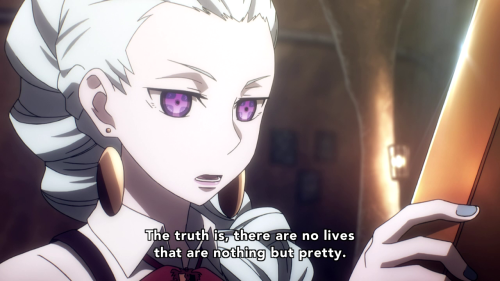
You could also say this about a ton of anime. This one especially.
Conclusion:
Overall, Death Parade is a thematic mess with a great presentation, but I don’t think it’s the worst thing to ever happen to anime. Honestly, I think the people going around saying this show is absolute garbage are exaggerating, and so are the people who are claiming this is the best show to come out in the Winter Season. Death Parade isn’t bad. It’s very entertaining at its high points and it is original, unlike so many other shows to come out recently. But, it has a whole ton of issues that kept me from really liking the show, which is a shame, because I really wanted to like it. Alas, that didn’t end up happening. I give Death Parade a 5 out of 10. It has its incredibly high points, but those good elements are held down by questionable writing choices and thematic confusion. My final recommendation is to check it out if you want something unique and entertaining, but if you’re looking for a breathtaking psychological anime that studies the human character, you’ll find elements of that, but you’ll probably be disappointed.
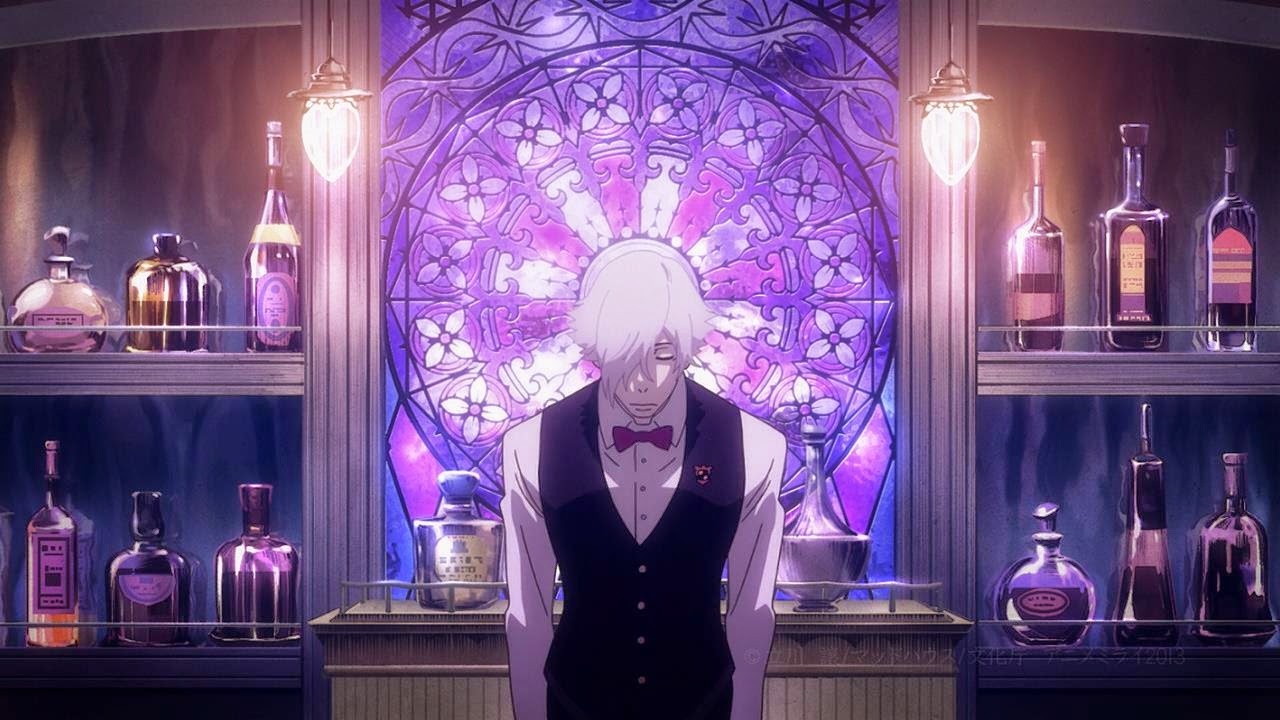
Thank you for reading. 

Well, that’s all from me. I hope you enjoyed that review/analysis of Death Parade. I’ll see you all in my next post. Until then!
reade more... Résuméabuiyad

Anime Review: Jojo's Bizarre Adventure (Parts 1-2)

Notice: This review will not cover the continuation of this anime, Stardust Crusaders, solely because the Stardust Crusaders storyline has not ended. I will only be reviewing 2012, though some comparisons to Stardust will probably appear. With that out of the way, let’s get started. 
Something I feel that the action genre lacks is punch and style. Most of these anime are aimed at the shonen demographic, and tend to follow the same exact formula every time. For example, let’s take a look at Black Bullet. There’s an edgy main protagonist that shouts out his fighting moves, female characters that have close to no purpose in the story, rushed and badly choreographed action, and a terrible sense of pacing. In other words, the execution of everything is pretty terrible. Or, how about Magical Warfare, a show that makes every other terrible show look like Fullmetal Alchemist? The anime just throws you into the action without any explanation, and then decides to throw in unnecessary fanservice. Or what about Needless, which has obnoxious characters and an obnoxious attitude that makes it so annoying? Well, what if I told you that there was a show that took all these action clichés, but didn’t do them terribly? In fact, the show handles itself in a way that these clichés don’t feel like clichés, but instead makes the show exciting, somehow intense, stylized, and immensely entertaining. This show is the topic of today’s review. Sit back, relax, and read on as I review the 2012 adaption of Jojo’s Bizarre Adventure.
The Story and Characters:
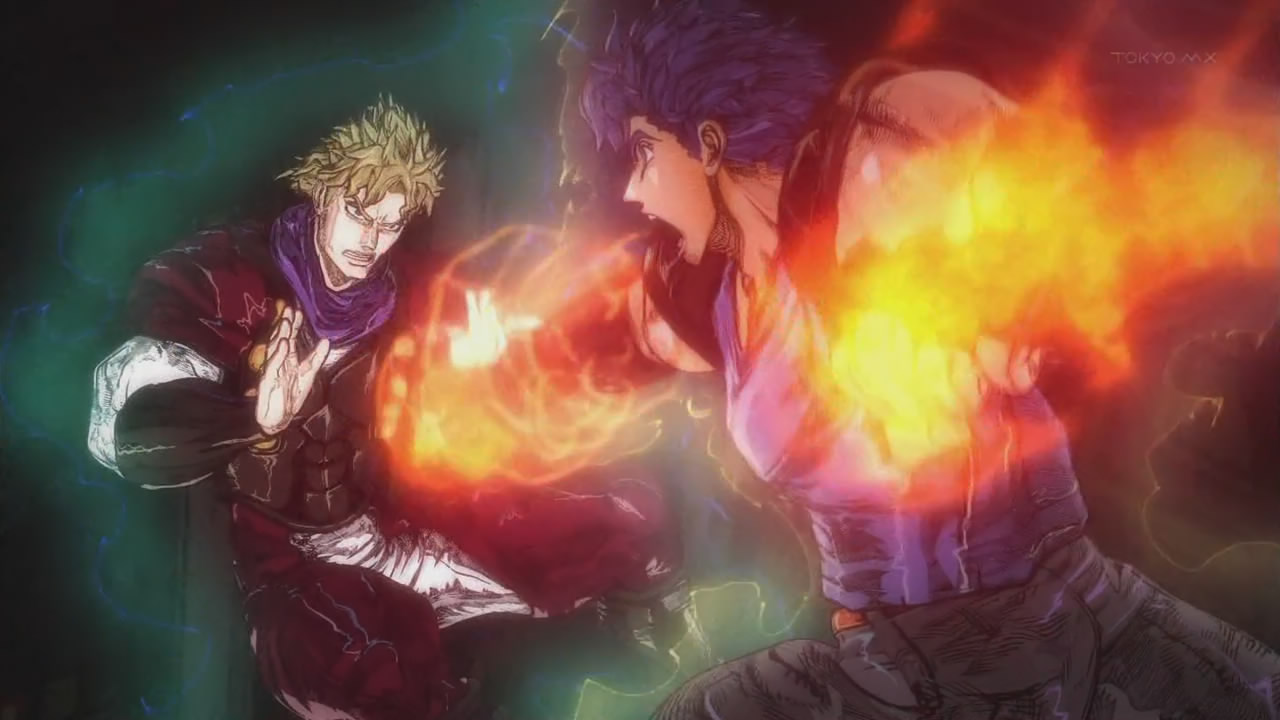
So, before I begin, a little background. Jojo’s Bizarre Adventure is based off of the first two parts of the original manga, written in the 1980s by Hirohiko Araki. The first part is Phantom Blood, which takes place in Victorian Era England. Points for taking place in my favorite time period, Phantom Blood! Anyway, the story focuses on a rivalry between Jonathan Joestar, the heir to the prestigious Joestar Family, and Dio, his adopted brother. This rivalry kicks the story into gear, as blood is spilt, new powers are discovered, and tragedy occurs. The second part, Battle Tendency, takes place in the 1930s, and involves the characters travelling all around the world. There’s a new protagonist, Joseph Joestar, and he has to finish what his grandfather Jonathon started back in the 1880s. Honestly, you don’t need to know more than that, because if I say anything else, it will probably ruin the fun, and it’s best to go into this show with as clean a slate as possible. As for the stories themselves, well, I’ll have to split this into two parts:
Phantom Blood:
Something I’ve noticed while reading reviews for this show is that people generally don’t like this arc that much, and to be honest, I can see why, for three main reasons. Firstly, it is rather rushed and it takes a bit of time to process what’s happening because of that, and when you’re trying to construct a relatively straightforward over-the-top action show, that’s a bad sign. Secondly, the show takes itself a bit too seriously in this story arc. Yes, it is self-aware of how ridiculous it is, but it always felt like the show was holding back on just how ridiculous it could get, like it was somehow playing it safe while having the potential to be something completely ludicrous. Finally, Jonathan isn’t that great a protagonist. Okay, he’s not terrible, and I was able to get behind his character, but my main issue with his character is that he’s absolutely perfect in nearly every way, and that makes him rather hard to relate to at points. Though, his character does develop throughout the arc. In the beginning, when he’s a child, he’s pretty much a self-entitled brat with a hero complex, but when Dio comes along, that changes. By the end of the arc, Jonathan grows into a righteous gentleman, despite being pushed around and basically abused by Dio throughout his life. I will also say that Jonathan’s the most tragic main character, and, well, it is because of Dio. Speaking of, my criticisms of the Phantom Blood arc end here, and what better way to end it than to talk about Dio Brando? Dio is by far the best part of Phantom Blood, and is one of the best villain characters I’ve seen in quite some time. He’s just so entertainingly evil, and is actually a threatening opponent! Also, unlike the stereotypical anime villain, Dio actually has reasons for being evil. Dio grew up in a poor household with an abusive alcoholic father and a mother who died long ago. As he is growing up, Dio lives under the fantasy that he deserves better than what he got, as he is very intelligent but lacks opportunity. Because of this, he grows to resent his father and look for ways to move forward. When he gets adopted by the Joestars, he sees the bratty Jonathan and immediately despises him, since he probably can’t comprehend that this insolent and little brat had opportunities that he obviously didn’t appreciate. So, Dio tries to take Jonathan’s spot and put him in his place. And so begins a rivalry to last throughout the ages, and yeah, it literally lasts throughout the ages. Dio will continue to haunt the Joestar family for generations, but more on that later. Then there are the side characters, which are all pretty great: there’s Erina Pendelton, Will Zeppeli, and Speedwagon, who are all memorable in their own ways. Overall, while this arc is still enjoyable to watch, it has its problems, and can feel a bit boring at points.
Phantom Blood in a nutshell
Battle Tendency:
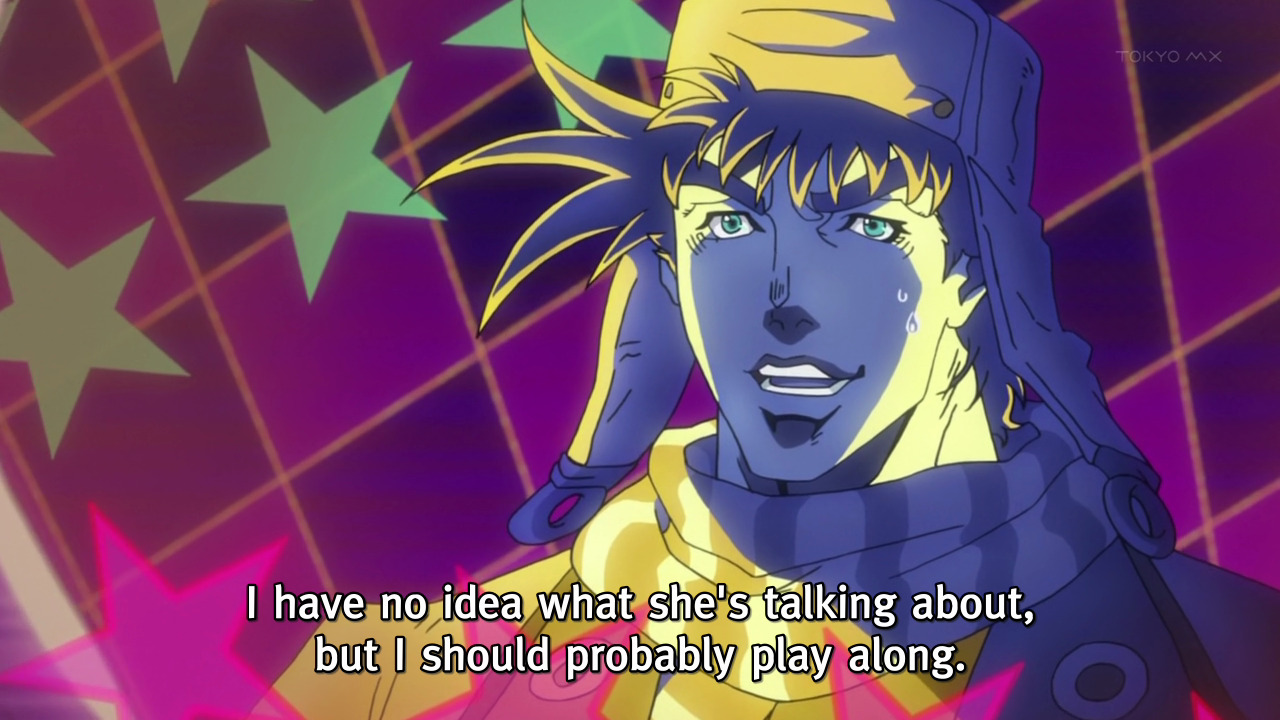
In this arc, however, all of my previous problems with Phantom Blood vanish, and what’s left over creates something that is truly spectacular in my opinion. Battle Tendency is what I wanted Jojo to be when I first watched it and more. There’s no holding back on how preposterous the content is this time around, as the show constantly tops itself with newfound absurdity every fight. This arc is also freaking hilarious! Seriously, nearly every joke in this arc hits its mark, and had me laughing quite a few times. Most of the time, it was making fun of how strange the show is, but a good percentage of the comedy came from the main protagonist, Joseph Joestar. Unlike Jonathan, Joseph is a fantastic main character. He’s rather laid back and likes to mess around with people (and hilarity ensues), but he also has a short temper, and can get really pissed off when people don’t take him seriously when he’s trying to be serious. He’s also very observant, and uses this ability to give himself advantages during battle. For example, he uses his enemies’ arrogance to provoke them to let him live, so that he can fight them again later when he’s stronger. Okay, that’s a bit of a cliché, but it felt like Joseph could get away with it because his enemies (the Pillar Men) are incredibly strong, and don’t think they can be beaten. So, when Joseph promises them that he’ll be able to beat them later, well, they underestimate him, since they’ve defeated so many other humans in the past. Good reasoning, no? And, ultimately, what makes Battle Tendency so good is how it pays attention to small details like that. The show makes it clear through characterization what the character’s motivations are, and who they are, making the situations plausible. Well, as plausible as you can get considering what Jojo is about, but again, it’s these tiny details that help make it seem plausible. In other words, Jojo is great at covering its tracks, and manages to explain its logic in a concise manner so that, while it’s ridiculous, makes sense in the world the anime has built. This is why I don’t think calling Jojo “dumb fun” really does it any justice, because while it knows what it is and loves to flaunt its ridiculousness, it never does so to a point where the audience feels that what it’s doing is improbable. And, in my opinion, the writers had to know what they were doing in order to make me come up with that conclusion. This is what puts Jojo above shows like Date A Live, Valvrave the Liberator, and Twintails, which are all self-aware about how stupid they are, but none of them really paid attention to what they were doing, which can result in the audience thinking that the anime is dumb. That’s not what Jojo is; it’s the exact opposite, and because of that, it’s an anime that I’ve been waiting to watch for a very long time: a show that knows what it is, loves what it is, and fully takes advantage of every opportunity it comes across, leading to an immensely satisfying experience. Finally, there are the side characters: Smokey, Speedwagon (again), Lisa Lisa, Cesar Zeppeli, Strohiem, and the three Pillar Men (Kars, ACDC, and Wham). They’re all great, though my favorite character is definitely Joseph. In fact, he’s become one of my favorite characters period, because he’s just a joy to watch. Overall, Battle Tendency fixed the problems of the first arc and delivered a story filled with over-the-top ridiculousness and great characters.
A clip of Joseph's hilarity, because why not?
The Presentation:
The animation of Jojo is fairly average. Sometimes the movements were a bit clunky, sometimes the characters looked a bit off, and some scenes were so hilariously low-budget that it added to the overall insanity of the show, but there’s nothing too too wrong with it that it will break your immersion. However, the design is really where the show shines. Jojo has some of the most distinct character designs that I’ve seen in anime, and the backgrounds all look great! The colors are also really interesting and stylish, which separates Jojo from many other anime that stick to traditional color pallets. Though, sometimes they did go a bit overboard with the colors, but it didn't bother me too much. Also, the addition of huge words in the background like “menacing” really adds to the show, making it even more over the top and henceforth more entertaining. Now, let’s move on to the music. There were two composers for Jojo, one per part: Phantom Blood’s music was done by Hayato Matsuo, and Battle Tendency’s music was done by Taku Iwasaki. I haven’t seen any anime that the former composed for, and quite frankly, his work on Phantom Blood was okay. It fit the atmosphere of the show, but nothing really stood out. My favorite song from the OST is “Capture the Target” (Phantom Blood), but even then, I wouldn’t willingly go out of my way to listen to it. Battle Tendency, on the other hand, is another story. Taku Iwasaki is actually one of my favorite anime composers, as he also did Katanagatari, Soul Eater, Gurren Lagann, Jormungand, Gatchaman Crowds, and Noragami, all of which have great OSTs. Well, I haven’t seen Gurren Lagann or Gatchaman Crowds yet, but I’ve stumbled across their OSTs on Youtube, and I really liked both of them. When I learned that Iwasaki composed the music for Battle Tendency, I was pleasantly surprised. Iwasaki’s style is combining older-sounding music with electronic beats, which is apparent in Jojo’s OST, and I’d argue that this is his best soundtrack to date. The music just makes the entire show exciting and intense, and I can’t picture any other composer tackling Jojo. Heck, I normally hate soundtracks that use dubstep, but it really works in Jojo for whatever reason! My favorite songs are “Awaken”, “Propaganda”, “Avalon”, and "Pulse", which I highly recommend listening to. I’d also like to mention the phenomenal sound mixing in this show, along with the perfectly timed sound effects. I normally don’t bring this stuff up because I don’t think it’s that big a deal, but the addition of over the top sound effects really adds to the overall entertainment value in this case. Then, there are the openings, which are both fantastic in their own ways, though they do spoil a lot of the story if you know what to look for. The opening that’s the guiltiest of this is the Phantom Blood opening, which overtly spoils the first three episodes. So, don’t watch the OP until you get to episode 4. Then there's the ED, which, strangely enough, is "Roundabout" by the band Yes. I guess it's because the author loves American rock, but I was certainly surprised to see that as the ED, and I'm glad the show introduced me to that song. Finally, there’s the voice acting. Jojo’s Bizarre Adventure 2012 does not have an English dub, and this is one of those cases where I wouldn’t want to watch an English version. The Japanese voice acting is so perfect that I seriously can’t imagine watching Jojo another way. The best performances go to Takehito Koyasu as Dio Brando, who, fun fact, also voiced Sugoh in Sword Art Online (he certainly stepped up his game) and Tomokazu Sugita as Joseph Joestar, who’s known for voicing Kyon in the Haruhi Suzumiya franchise. Both actors sounded like they were having a ton of fun in their roles, and it shows by how entertaining both characters are. Props to you, Japan.
"Capture The Target"
"Awaken"
"Propaganda"
"Avalon"
"Pulse"
Phantom Blood OP (full version):
Battle Tendency OP:
ED:
Conclusion: 
Jojo’s Bizarre Adventure is an extremely fun and over the top action anime that is actually sort of hard to recommend. It’s one of those shows where you’re either going to really love it or really dislike it, and even though I really loved the show, I can see why people wouldn’t like it at all. If you don’t enjoy shows that are incredibly insane, bizarre (cough cough), cliché, and downright absurd, even if they are self-aware about it, then you’re definitely not going to enjoy this at all. Also, if you’re looking for an incredibly smart show with deep ideas and themes...why did you even consider watching this show in the first place? Granted, Jojo is smart, but it’s not smart in the same way that a show like Ergo Proxy is smart, if you get what I’m saying. But, for me personally, this was the most fun I’ve ever had watching an anime, and even though it does have its problems, I love Jojo’s Bizarre Adventure, and I hope that you will too if you ever decide to watch it. I give the Phantom Blood arc a 7.5 out of 10, and the Battle Tendency arc a 9.5 out of 10. My overall score of Jojo’s Bizarre Adventure 2012 is an 8.5 out of 10, and a recommendation to watch it. But, like always, it is up to you to decide your own opinions.
The next review will be on...something. Until then!
reade more... Résuméabuiyad

Analysis: The Great Gatsby and The Pecuniary American Dream

            In F. Scott Fitzgerad’s novel The Great Gatsby, one of the main ideas of the novel is that the American dream of success is being defined by wealth and status instead of by freedom and individualism. The 1920s was a decade of wealth, consumerism, and prosperity, with many new people becoming rich quickly through the stock market and the booming economy. However, with all of this change in lifestyle came a conservative retaliation, from those who have been rich all their lives and believe the people with this “new money” are tarnishing the country. The American dream also morphed for the poor, as they began to believe that the only way to be happy and successful in life is to be wealthy, as money appears to solve all of the rich people’s problems. Each of the characters in The Great Gatsby signifies one of these aspects of American society: Daisy and Tom Buchanan symbolize old-fashioned traditions, Gatsby and Nick represent the newcomers into the world of prosperity, and the Wilson family are the poor, dreaming aspect of American life, wishing for something more in their seemingly insignificant lives. F. Scott Fitzgerald’s novel The Great Gatsby is a social commentary on the American culture of the roaring 1920s, showing how the traditional American dream of freedom and individuality crumbled beneath a mountain of wealth, greed, oppression, and carelessness.
            To contextualize, the 1920s was the period following World War I, and as Eric Foner states, “With its flappers (young, sexually liberated women), speakeasies (nightclubs that sold liquor in violation of Prohibition), and a soaring stock market fueled by easy credit and a get-rich-quick outlook, it was a time of revolt against moral rules inherited from the nineteenth century,” (Foner 819). This was a decade when new industries relating to cars and electronics sprung into existence, such as General Motors. Due to this increase in available consumer goods, American society became more concentrated on the buying and selling of these products. Credit, in which people could buy products now and pay later, became more popular, and advertising also became more prominent in American life. It was also the time that saw America’s first celebrities, like the actor Charlie Chaplin, baseball star Babe Ruth, and aviator Charles Lindbergh. However, there were many Americans who resented these newfound liberties, viewing them to be immoral, and they also feared the new ethnic and racial diversity found in American cities. With a reemergence of the Klu Klux Klan and the Monkey Scopes Trial combating the idea of Social Darwinism, it seemed like there were many traditional Americans not ready for change. Along with these traditionalists, there were also the poor, who mostly lived on farms or in the cities as low-wage workers. These people looked up to the rich and affluent, thinking that wealth was the key to happiness, and moved out East to attempt a climb to prosperity. All of these aspects of American society are represented in The Great Gatsby, with the most prominent example being Gatsby himself.
            James Gatz is a poor man living a rich man’s sham. He grows up out west in North Dakota, and dreams of wealth and success: “The most grotesque and fantastic conceits haunted him in his bed at night. A universe of ineffable gaudiness spun itself out in his brain…each night he added to the pattern of his fancies…they were a satisfactory hint of the unreality of reality,” (Fitzgerald 99). After he meets Daisy, he decides to act on his fantasies. He is in love with her, but due to her status in the upper echelons of society, he believes that the only way they can be together is if he becomes rich. This is displayed during the scene in which Gatsby shows Daisy his house: “He [Gatsby] hadn’t once ceased looking at Daisy, and I think he revalued everything in his house according to the measure of response it drew from her [Daisy’s] well-loved eyes,” (91). His method of making money, though, is shrouded in mystery. For a good portion of the book, Gatsby hides his past from the other characters, arousing suspicion and spreading rumors. Tom is the one who discovers that Gatsby made his fortune by taking advantage of Prohibition and illegally selling alcoholic beverages with Mr. Wolfstein. This begs the question: why should a man have to resort to breaking the law to achieve a noble goal? Why is money so intertwined with this vision of happiness? Ultimately, his fortune does not win Daisy over, and Gatsby dies alone. Money and status did not help Gatsby achieve his dream at all. As shown by the lives of the Buchanans, money and status can lead to personal dissatisfaction and relationships lacking substance.
            Tom and Daisy Buchanan are two people who have been born into a fabricated version of the American Dream. Tom comes from a very wealthy and old family, while Daisy is a southern belle from a comfortable family. The two get married because Daisy appears to be the ideal wife for a man of Tom’s stature. True love does not exist in their relationship, as Tom carelessly has an illicit affair with another woman. When Gatsby returns, he decides to make a fortune to attract Daisy back, as he believes that is the only way to rekindle their old romance. However, Daisy becomes disenchanted with Gatsby, as the new materialistic Gatsby is too similar to Tom, the disloyal and unpleasant man she’s already married to. Daisy and Tom are also not fond of the “new money” in American culture. During one of Gatsby’s parties, Nick observes, “She [Daisy] was appalled by West Egg, this unprecedented ‘place’ that Broadway had begotten upon a Long Island fishing village – appalled by its raw vigor that chafed under old euphemisms and by the too obtrusive fate that herded its inhabitants along a short-cut from nothing to nothing,” (107). This traditional mindset represents the backlash towards all these new aspects of American culture, but ironically, since both Tom and Daisy have technically achieved the American dream of monetary happiness, the American dream is backwards. Daisy is trapped in an unhappy marriage with a man she does not love because leaving him would ruin her pristine image of an innocent southern belle. However, poor woman have more freedoms, such as the right to work in factories and be with whomever they want without facing social repercussions. African Americans look up to men like Tom, but do not realize that those men are selfish men who would prefer that Africans be enslaved again, as Tom says, “It’s up to us, who are the dominant race, to watch out or these other races will have control of things,” (13). Ironically, by pursuing wealth, all these people are achieving is a lifestyle of less freedom and individuality, and more focused on image and material objects. However, people like Myrtle Wilson still strive for this lifestyle, and remain ignorant towards its hidden vices.
            Myrtle and George Wilson live a lower-class lifestyle while striving to succeed. Mr. Wilson is an honest businessman who owns a car repair shop, but his hard work results in low wages. His lack of money is shown by how he borrows a suit to wear to his wedding with Myrtle, which causes Myrtle to believe their marriage is a mistake: “The only crazy I was was when I married him. He borrowed somebody’s best suit to get married in, and never told me about it,” (35). Myrtle believes that the ideal life is one of objects, wealth, and appearances. She wears the fanciest clothing she can find, and cheats on her husband with Tom so she can feel rich by association. When Tom buys her a dog in the novel, she does not know anything about the breed or how to take care of it. However, because Myrtle sees rich people walk around with lapdogs, she wants a lapdog as well, so she can appear rich. As for Tom, he is attracted to Myrtle because, at heart, he is the opposite of high class: he is racist, sexist, selfish, and he disrespects his wife. Myrtle represents a fantastical escape from his dispassionate marriage. As Tom is part of an upper echelon of society, he is not able to freely be with Myrtle without potentially sacrificing his reputation, which is another example of the oppression that comes with being upper class. Finally, when Myrtle is killed, Tom and Daisy take no responsibility for their crimes despite their guilt. Instead, the burden falls upon Mr. Wilson, the honest businessman who does nothing wrong, and because he feels justice will not prevail in this case, he takes matters into his own hands. The end result is Gatsby getting shot by Mr. Wilson, Mr. Wilson then killing himself, and the Buchanans cowardly retreating back into the security of their money. Why do the honest yet poor people have to clean up the mess? Is the American dream truly about abandoning responsibility in such a crude manner? According to the protagonist Nick Carraway, and therefore F. Scott Fitzgerald, the American dream should be about something entirely different.
            Being wealthy in 1920s America comes with its own restrictions and misconceptions, but even today, people still believe money can buy happiness, and strive to be wealthy. As displayed in The Great Gatsby, everyone who is not rich wants to be rich, but the people who are rich do not actually achieve their desires. The character that finds a middle ground in the novel is Nick Carraway. Nick is a middle-class man from out West, who moves East out of necessity. Over the course of the novel, Nick observes and analyzes the behaviors of the other characters, specifically Daisy, Tom, and Gatsby. His reaction is disgust, except towards Gatsby. He instead comes to the conclusion that “it was what preyed on Gatsby, what foul dust floated in the wake of his dreams,” that really destroyed him (2). In other words, outside forces, specifically the misguided desire to be wealthy as a solution to one’s problems, corrupted what was otherwise a noble cause of wooing the woman he loves. Fitzgerald points out multiple times that his characters that have supposedly achieved the American dream of wealth are discontent. Daisy and Tom are not in love with each other, Gatsby is not able to achieve his goal of being with Daisy by dazzling her with his wealth, and the Wilson family is destroyed because of Myrtle’s wish to feel rich. The only character to truly see through all this corruption is Nick, the observer. He ultimately comes to the conclusion that the so-called “American dream” is corrupt. Nick’s character illustrates Fitzgerald’s message that wealth does not guarantee happiness, but the search for individualism and sincere self-expression is in itself a method of attaining freedom and happiness. Nick exemplifies F. Scott Fitzgerald’s ideal American dream by finding solace in writing about his experiences at his home in the Midwest, without ever amassing a huge fortune and remaining true to himself.

Works Cited
Fitzgerald, F. Scott. The Great Gatsby. New York: Scribner, 2004. Print.
Foner, Eric. Give Me Liberty: An American History. 3rd ed. Vol. 1. New York: W.W. Norton,

            2012. Print.
reade more... Résuméabuiyad

Anime Review: Winter 2015 Anime Season

Winter was definitely an interesting season for anime. There were quite a few shows that gained some popularity in the beginning of the season, but then the hype faded as the quality dropped for a few of them. Anime that were going to be favorites of mine decided to make 180s and become either boring, bad, or both, and anime that I wasn't even planning on watching made it on my favorites list. This just goes to show why I shouldn't hype myself up over shows that haven't finished airing yet ._. Then there were the shows where I expected great things, and got great things, though those were sequels, so does that count? Ah, whatever. Here are my final thoughts on the anime I finished this season:
Death Parade:
I’m actually planning on releasing a QuickThoughts video about this anime soon, so I’ll keep this section of the post short. Death Parade was an entertaining show to watch weekly. The episodic stories that developed new and different characters were very interesting to watch and I found myself really liking it. The show was new, it wasn’t afraid to incorporate some psychological elements, the presentation is out of this world, and the characters were pretty likable. That is, until the finale went and ruined it for me. I really did not like how this show decided to end. The final episode felt rushed and relied too much on melodrama instead of actually founding a subtle basis for emotional connection beforehand. Not to mention that the show tried to present its ideas through pretty hurried exposition, which left no time for the actual events to sink in, and when it ended, I was left unsatisfied. However, I don't think it's a bad show, because when it's good, it's insanely good; but the not as good elements are glaring, and comes very close to overshadowing a decent show. Overall, I’d say that the quality of this show is very inconsistent, depending on the episode. There are some episodes that absolutely blew me away with how good they are, especially episodes eight and nine, but then there were others that felt empty and/or pointless. Though, I’d still say it’s an above average watch, and would recommend it to someone who needs something unique. I give it a 6 out of 10.
Yuri Kuma Arashi:
A ton of controversy surrounding this show arose in the beginning of the season only for the community to move on around a week later. Well, I said in my Winter First Impressions that I liked the show, and that hasn’t changed in the slightest. Actually, the show got better as it progressed. The last few episodes were really good, and I liked how the show decided to focus more on the character relationships later on, incorporating all of the strange surrealism and ideas it mentioned with it. As for all the themes in the show, that probably deserves a longer blog post or video if I wanted to talk about them in depth, but the main idea is to not conform, as to conform is to be invisible. Although, I will admit that the show has some problems. The characters could’ve received more time to develop, and there were a few plot holes, but at the same time, Yuri Kuma was more about expressing emotion than anything else, and for that, I praise it. I give it a 7 out of 10.
Your Lie in April:
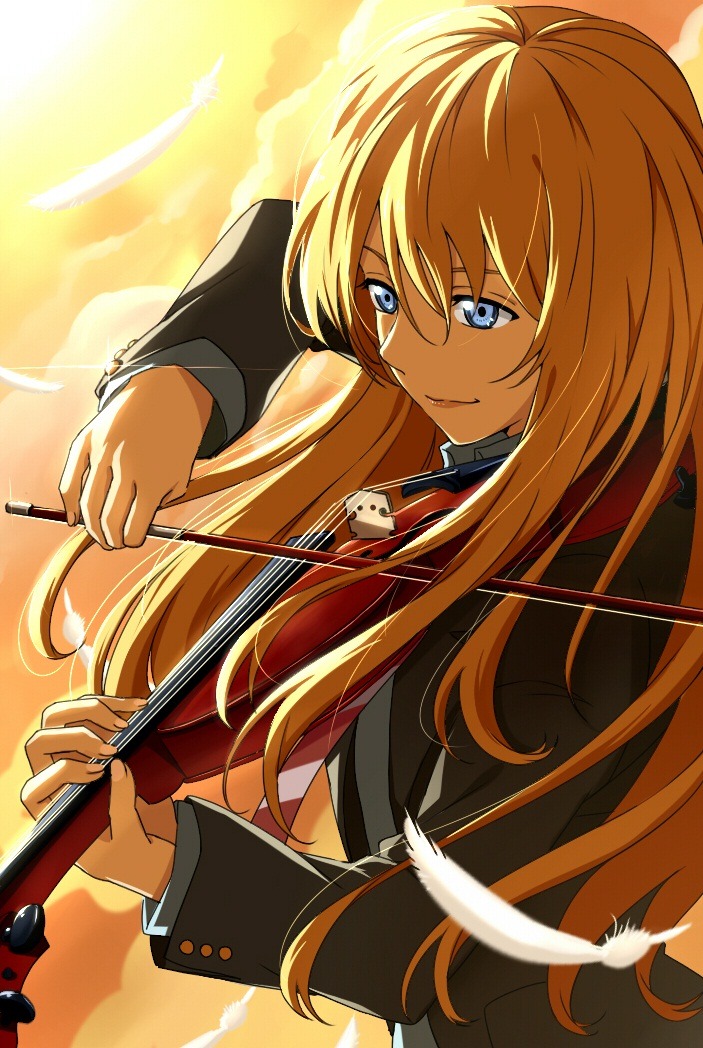
I honestly don’t think anyone expected this anime to be nearly as popular as it turned out to be. I mean, yeah, A-1 Pictures produced it, but for a mature romance anime to become popular is a huge rarity. As for my thoughts on this show, I liked it, but I didn’t fall in love with it like basically everybody else did. For one, the second half was not nearly as good as the first, and while I don’t think it’s bad, it has its issues. Like, why did the show shift the focus away from Kousei’s and Kaori’s relationship, which is the best part of the show, to multiple irrelevant side stories? However, what this show does well, it does incredibly well. Kousei is one of the best main characters I’ve seen in quite some time, with a definable personality and great character development. Kaori’s very well written too, acting as a juxtaposition to Kousei’s quite demeanor by being bright, upbeat, and extroverted. I also love the visuals, not just for its technical grace, but also for its symbolism and beautiful color pallet, creating some very powerful scenes. I’d recommend checking it out if you need a good romance anime, or want a good introduction to anime revolving around music. I give it a 7 out of 10.
Parasyte the maxim:
Ah, Parasyte. What a ride this has been. This show was thrilling, intense, heartfelt, and well written, at least for the most part. Towards the end, there were some writing choices that felt a little rushed and unneeded, and the last two episodes were like "Ferngully With Monsters: The Anime", but overall, I still really enjoyed this show, and think it's one of the best fall leftovers from 2014. It's certainly one of the best thrillers to come out in recent years, and the character development of both Migi and Shinichi is handled really well. The good far outweighs the bad here, and while I do think the manga is better, the anime is still a great watch. My only real complaint besides the strange ending was the dubstep music, which ranged from decent (like "Next To You", my favorite from the OST) to downright mood-breaking. I give it a 7.5 out of 10.
Durarara!!x2 Shou:
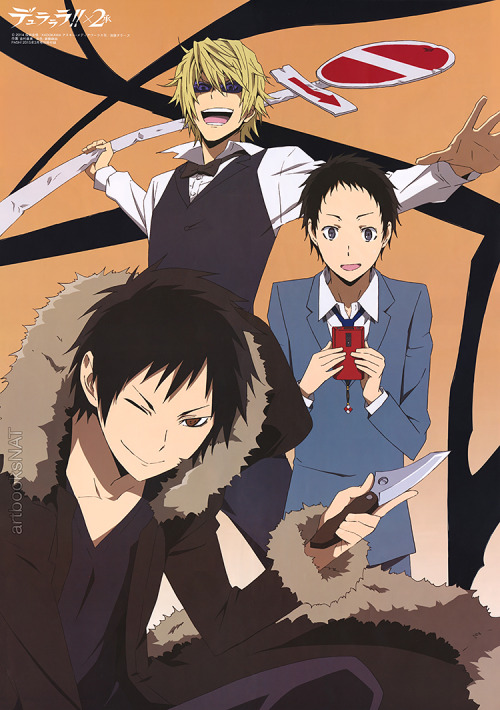
Oh, Durarara!!. Of course you'd be anime of the season. Why did I ever think otherwise? Okay, technically, the next show I'll be talking about is anime of the season, but that show began airing in Fall 2014, so if we're talking about pure 2015 anime, then it'd be Durarara!!x2 Shou. All of the insanity from the first season is still here, with brand new characters and events to spice things up, and the pacing has actually improved from the first season. Okay, yeah, it did feel slightly rushed at times, and there were moments where I had trouble understanding what was going on, but those were the exact same problems I had with the first season, and that's also what makes the show so enjoyable. You watch Durarara!! for the cool characters and seeing them end up in insane situations that you can't ever see coming, and I think that this season actually did a better job with that setup than the first. The only aspect I didn't like was the obvious drop in animation quality from Season 1, but Studio Shuka is just starting out, so I'll cut them some slack. Not every new studio can be a MAPPA or a Wit, I guess. Also, the cliffhanger at the end of episode 12 is the bane of my existence. I give it an 8 out of 10.

Yona of the Dawn:
Sometimes, you come across a show that you have absolutely no expectations for, but it turns out to be the best thing you've seen in quite some time. That is Yona of the Dawn for me. I did not expect this to be nearly as good as it turned out to be, and it's now high on my favorites list. The story was well paced, the world building was solid, the character development for nearly every character was absolutely fantastic, the character interactions were fun to watch and helped build character, and the presentation was just great! Studio Pirreot did a fantastic job with the coloring and the lighting, and the actual animation was fluid. The OST is the best from the season, no contest (except maybe Durarara!!x2). This show is now high on my favorites list, and that's a pretty big feat. Second season when? I give it a 9 out of 10.
P.S. Yona x Hak is my OTP.

So, that's what I finished watching over the Winter Season! Here are some anime I may check out later:
Maria The Virgin Witch: I heard good things about it, so even though it's outside of my normal comfort zone, I'll give it a shot.
Garo The Animation: I saw the first episode, thought it was really good, and put it on hold to watch when it's finished airing. I'll get around to it eventually.
Yatterman Night: Heard mixed things, but I'll try it out anyway.
Magic Kaito: I'm actually watching this right now (at least after Jojo's Bizarre Adventure 2012), so expect some thoughts on this in the future.
Shirobako: This was probably the most well-received anime of 2014-2015, so why wouldn't I watch it? 
The Seven Deadly Sins: I heard something about this eventually being on Netflix or something. If that's true, I'll watch it.

And here's what I dropped:
Tokyo Ghoul √A: I got bored really quickly. Still haven't seen past the first episode, and I don't really intend on continuing it.
The Rolling Girls: Same as the former, except I lasted until the fifth episode. The first two episodes were so enjoyable, but then it just got dull and uninteresting.
Saekano: Hated episode 0, but I heard that the actual show is different. May watch it again, but I'm not putting myself through more episode 0s if I can help it.

What are your thoughts on this season? Leave it in the comments and I'll see you all next time!

reade more... Résuméabuiyad